
The Formulator’s Guide to Botanical Oils for Transparent Soap (7 Oils Tested)
May 21, 2026
Ge-132 Chronic Toxicity: 2-Year Rat Study — No Organ Damage at Any Dose
May 23, 2026Broken vs Unbroken Haematococcus pluvialis: Antioxidant & Anti-Aging — A Head-to-Head Study
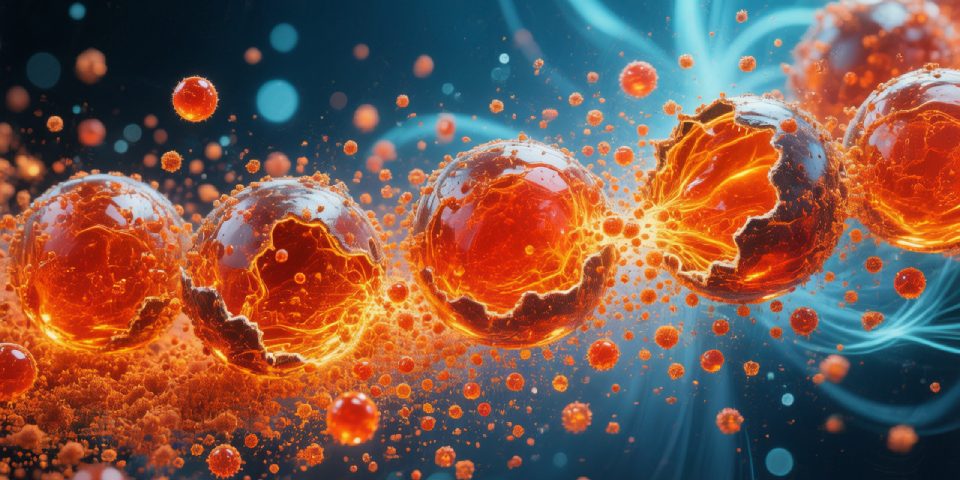
Haematococcus pluvialis is nature’s richest source of astaxanthin — one of the most potent natural antioxidants known. But does breaking the algae’s tough cell wall actually make a measurable difference? A 2018 study led by Huang Pujun and colleagues at Wenzhou Medical University and Zhejiang Chinese Medical University put this question to the test, comparing cell-broken and unbroken H. pluvialis powder across three in vitro antioxidant assays and a comprehensive in vivo anti-aging trial in naturally aged rats — measuring serum, brain, and skin biomarkers after 7 weeks of oral administration.
Why Cell-Wall Breaking Matters
Haematococcus pluvialis is a freshwater microalga that, under environmental stress, transforms into a dormant cyst stage — forming a thick, rigid cell wall while accumulating massive amounts of astaxanthin (up to 3–5% of dry weight). Approved by China’s Ministry of Health as a novel food ingredient in 2010 (Announcement No. 17), H. pluvialis has attracted intense commercial interest in the nutraceutical, cosmetic, and functional food industries.
But the same cell wall that protects the alga also presents a bioavailability barrier. The tough sporopollenin-like wall hinders both solvent penetration during extraction and nutrient release during digestion. Cell-wall breaking — via physical, chemical, or enzymatic methods — is intended to solve this problem, but until this 2018 study, no published research had systematically quantified whether breaking the cell wall actually improves biological activity.
Study Design at a Glance
In Vitro — 3 Radical Systems
ABTS radical cation, DPPH radical, and hydroxyl radical (·OH) scavenging. IC50 values calculated for each. L-ascorbic acid (VC) as positive control.
In Vivo — Natural Aging Model
12-month-old SD rats (middle-aged/aged) vs 2-month-old young controls. No chemical induction — purely age-related oxidative stress.
Dosing Protocol
90 mg/kg/day oral gavage for 7 weeks. Vitamin E (100 mg/kg) as positive control. n = 8 per group.
Multi-Organ Biomarkers
Serum: MDA, SOD, T-AOC, GSH, GSH-Px, CAT, PCO. Brain: MDA, SOD, GSH. Skin: tyrosinase, lipofuscin, hydroxyproline. Plus blood lipids and liver enzymes.
In Vitro Results: Broken-Cell Powder Dominates All Three Assays
Both powders showed concentration-dependent free radical scavenging (tested at 1, 2, 4, 6, 8, and 10 mg/ml). But the broken-cell powder demonstrated dramatically stronger activity:
| Sample | ABTS IC50 (mg/ml) | DPPH IC50 (mg/ml) | ·OH IC50 (mg/ml) |
|---|---|---|---|
| Broken-cell H. pluvialis Powder | 2.131 | 4.381 | 17.522 |
| Unbroken H. pluvialis Powder | 6.579 | 18.468 | 465.38 |
| Vitamin C (L-ascorbic acid) — Positive Control | 0.051 | 0.003 | 0.233 |
| Metric | ABTS | DPPH | ·OH |
|---|---|---|---|
| How many times stronger is broken-cell vs unbroken? | 3.1x | 4.2x | 26.6x |
The hydroxyl radical gap is staggering: the unbroken powder required 465.38 mg/ml to achieve the same 50% scavenging that the broken-cell powder delivered at just 17.52 mg/ml. Hydroxyl radicals are the most reactive and damaging ROS in biological systems — making this 26.6x advantage therapeutically meaningful. At 88.9% of all concentration test points, the broken-cell powder outperformed the unbroken powder.
Why Does Breaking the Cell Wall Make Such a Difference?
When H. pluvialis enters its cyst stage, it builds a trilayer cell wall composed of a tough, sporopollenin-like outer layer that is highly resistant to chemical and enzymatic degradation. This wall serves two opposing functions:
- In nature: it protects the alga from UV radiation, desiccation, and predators — allowing survival for decades in harsh conditions.
- In the body: it blocks the release of intracellular astaxanthin during digestion, drastically reducing bioavailability.
Cell-wall breaking disrupts this barrier, exposing the astaxanthin-rich cellular contents to digestive enzymes and extraction solvents. This is why the broken-cell powder showed such dramatically lower IC50 values — more astaxanthin was accessible for radical scavenging.
In Vivo Result 1: Serum Antioxidant Restoration
Aging is associated with elevated oxidative stress and depleted antioxidant defenses. After 7 weeks of treatment, both powders showed benefits — but the broken-cell powder went further:
| Group (Dose) | MDA (nmol/ml) | SOD (U/ml) | T-AOC (U/ml) |
|---|---|---|---|
| Young Normal Control (2-month) | 3.21 ± 0.39 ** | 24.58 ± 5.03 | 0.71 ± 0.02 ** |
| Aged Model Control (12-month) | 4.58 ± 0.70 | 20.15 ± 3.84 | 0.66 ± 0.04 |
| Vitamin E (100 mg/kg) | 3.49 ± 0.51 ** | 20.56 ± 3.38 | 0.69 ± 0.01 * |
| Broken-cell H. pluvialis (90 mg/kg) | 3.49 ± 0.45 ** | 24.56 ± 5.24 | 0.69 ± 0.01 * |
| Unbroken H. pluvialis (90 mg/kg) | 4.33 ± 0.95 | 22.87 ± 2.04 | 0.69 ± 0.01 * |
* P < 0.05, ** P < 0.01 vs aged model control. n = 8 per group.
Three key takeaways: (1) The broken-cell powder reduced serum MDA (a lipid peroxidation marker) to the same level as the young control — a 24% reduction vs the aged model. The unbroken powder showed only a marginal, non-significant decrease. (2) SOD activity in the broken-cell group recovered to 24.56 U/ml, nearly matching young levels. (3) Both powders significantly raised T-AOC, suggesting that even unbroken H. pluvialis provides some systemic antioxidant benefit.
In Vivo Result 2: Glutathione System — Broken-Cell 4x Stronger
| Group (Dose) | GSH (μmol/L) | GSH-Px (U/L) | CAT (U/ml) | PCO (nmol/L) |
|---|---|---|---|---|
| Young Normal Control | 27.16 ± 11.43 * | 81.26 ± 6.76 * | 33.47 ± 11.86 | 6.60 ± 1.83 |
| Aged Model Control | 15.14 ± 5.72 | 72.68 ± 7.12 | 26.36 ± 6.46 | 7.95 ± 3.17 |
| Vitamin E (100 mg/kg) | 25.00 ± 5.20 ** | 80.93 ± 10.25 | 31.74 ± 4.62 | 6.35 ± 2.09 |
| Broken-cell H. pluvialis (90 mg/kg) | 28.52 ± 7.37 ** | 82.93 ± 9.46 * | 36.29 ± 8.77 * | 6.45 ± 2.02 |
| Unbroken H. pluvialis (90 mg/kg) | 18.49 ± 3.87 | 81.93 ± 8.92 * | 32.68 ± 4.61 * | 6.19 ± 1.35 |
* P < 0.05, ** P < 0.01 vs aged model control. n = 8.
The GSH difference is dramatic: broken-cell powder raised serum GSH to 28.52 μmol/L — surpassing even the young control (27.16). Its GSH elevation relative to the aged model was 3.99 times greater than the unbroken powder’s effect. This is important because glutathione is the body’s master antioxidant, directly neutralizing free radicals and recycling other antioxidants like vitamins C and E.
In Vivo Result 3: Brain Protection — Where Broken-Cell Truly Pulls Ahead
The brain is particularly vulnerable to oxidative damage due to its high oxygen consumption, abundant polyunsaturated fatty acids, and relatively weak antioxidant defenses. In this study, only the broken-cell powder demonstrated significant neuroprotection:
| Group (Dose) | MDA (nmol/mgprot) | SOD (U/mgprot) | GSH (μmol/gprot) |
|---|---|---|---|
| Young Normal Control | 1.09 ± 0.11 | 1.59 ± 0.57 ** | 22.52 ± 3.91 ** |
| Aged Model Control | 1.22 ± 0.20 | 0.81 ± 0.43 | 14.22 ± 3.91 |
| Vitamin E (100 mg/kg) | 0.99 ± 0.15 * | 1.01 ± 0.47 * | 15.80 ± 2.46 |
| Broken-cell H. pluvialis (90 mg/kg) | 0.96 ± 0.11 ** | 1.28 ± 0.50 * | 18.29 ± 2.06 * |
| Unbroken H. pluvialis (90 mg/kg) | 1.13 ± 0.18 | 0.99 ± 0.83 | 14.92 ± 1.93 |
* P < 0.05, ** P < 0.01 vs aged model control. n = 8.
The unbroken powder had no significant effect on any brain marker. The broken-cell powder reduced brain MDA 2.89 times more than the unbroken and elevated brain GSH 5.81 times more. For nutraceutical brands targeting cognitive aging and neuroprotection, cell-wall breaking is non-negotiable.
In Vivo Result 4: Skin Anti-Aging — Collagen Boost + Melanin Suppression
Skin aging manifests as wrinkles (collagen loss), pigmentation (melanin accumulation), and reduced elasticity. The study measured three skin-specific biomarkers:
| Group (Dose) | Tyr (μmol/L) | LF (ng/ml) | Hyp (ng/ml) |
|---|---|---|---|
| Young Normal Control | 72.74 ± 3.63 ** | 5.19 ± 0.62 | 436.96 ± 114.41 |
| Aged Model Control | 79.22 ± 4.54 | 4.85 ± 1.06 | 372.43 ± 63.86 |
| Vitamin E (100 mg/kg) | 70.01 ± 1.88 ** | 4.82 ± 0.74 | 440.81 ± 180.97 |
| Broken-cell H. pluvialis (90 mg/kg) | 70.01 ± 2.78 ** | 4.70 ± 0.80 | 488.97 ± 66.54 ** |
| Unbroken H. pluvialis (90 mg/kg) | 71.19 ± 4.11 ** | 4.84 ± 0.67 | 366.65 ± 114.39 |
** P < 0.01 vs aged model control. Tyr = tyrosinase (melanin synthesis enzyme). LF = lipofuscin (aging pigment). Hyp = hydroxyproline (collagen marker).
Both powders significantly reduced tyrosinase activity — meaning both can suppress melanin production and contribute to skin brightening. But only the broken-cell powder significantly elevated hydroxyproline (Hyp), a direct marker of collagen content. The broken-cell group reached 488.97 ng/ml — a 31% increase over the aged model and even surpassed the young control level. Earlier research on H. pluvialis extract in human dermal fibroblasts showed it promotes collagen production by inhibiting MMP1 and MMP3 mRNA while upregulating TIMP1 expression — which may explain this mechanism.
In Vivo Result 5: Blood Lipids & Liver Function — Complementary Benefits
| Group (Dose) | TC (mmol/L) | TG (mmol/L) | ALT (U/L) | AST (U/L) |
|---|---|---|---|---|
| Young Normal Control | 1.13 ± 0.10 ** | 0.33 ± 0.12 ** | 38.63 ± 6.91 ** | 93.00 ± 16.34 ** |
| Aged Model Control | 1.36 ± 0.17 | 0.56 ± 0.10 | 69.50 ± 15.64 | 158.75 ± 60.72 |
| Vitamin E (100 mg/kg) | 1.33 ± 0.17 | 0.54 ± 0.13 | 49.25 ± 13.83 * | 103.75 ± 15.19 * |
| Broken-cell H. pluvialis (90 mg/kg) | 1.21 ± 0.13 | 0.42 ± 0.11 * | 65.88 ± 18.06 | 117.13 ± 14.40 |
| Unbroken H. pluvialis (90 mg/kg) | 1.36 ± 0.21 | 0.49 ± 0.08 | 61.63 ± 21.61 | 97.50 ± 20.23 * |
* P < 0.05, ** P < 0.01 vs aged model control. TC = total cholesterol. TG = triglycerides. ALT/AST = liver enzymes.
Broken-Cell: Triglyceride Reduction
- Significantly reduced serum TG (0.42 vs 0.56 mmol/L — a 25% drop)
- Consistent with prior research showing H. pluvialis extract lowers plasma TC/TG in ApoE(-/-) mice
- Potential cardiovascular benefit for aging populations
Unbroken: Liver Enzyme Protection
- Significantly reduced AST (97.50 vs 158.75 U/L — a 39% drop)
- Significantly stronger than the broken-cell powder on this metric
- Suggests some hepatoprotective compounds may be partially lost during cell-wall breaking
Head-to-Head Summary: Broken vs Unbroken Across All Endpoints
| Endpoint | Broken-Cell (90 mg/kg) | Unbroken (90 mg/kg) | Winner |
|---|---|---|---|
| ABTS IC50 | 2.131 (3.1x better) | 6.579 | Broken |
| DPPH IC50 | 4.381 (4.2x better) | 18.468 | Broken |
| ·OH IC50 | 17.522 (26.6x better) | 465.38 | Broken |
| Serum MDA (lipid peroxidation) | Significantly reduced | Not significant | Broken |
| Serum T-AOC | Significantly elevated | Significantly elevated | Tie |
| Serum GSH | Significantly elevated (3.99x stronger) | Not significant | Broken |
| Serum GSH-Px & CAT | Significantly elevated | Significantly elevated | Tie |
| Brain MDA | Significantly reduced (2.89x stronger) | Not significant | Broken |
| Brain SOD | Significantly elevated | Not significant | Broken |
| Brain GSH | Significantly elevated (5.81x stronger) | Not significant | Broken |
| Skin Tyrosinase | Significantly reduced | Significantly reduced | Tie |
| Skin Hydroxyproline (Collagen) | Significantly elevated (+31%) | Not significant | Broken |
| Serum Triglycerides | Significantly reduced (-25%) | Not significant | Broken |
| Serum AST (Liver) | Not significant | Significantly reduced (-39%) | Unbroken |
Verdict: Broken-cell powder won 10 out of 14 endpoints, with 3 ties and only 1 endpoint (AST/liver protection) favoring the unbroken powder. For anti-aging, antioxidant, brain health, and skin collagen applications, cell-wall breaking is clearly superior. The unbroken powder’s sole advantage in AST reduction may reflect the loss of certain hepatoprotective compounds during the wall-breaking process — an area deserving further study.
B2B Applications: Where Broken-Cell H. pluvialis Delivers Value
Brain Health & Cognitive Aging
26.6x stronger hydroxyl radical scavenging + significant brain MDA reduction, SOD restoration, and GSH elevation. Ideal for nootropic and neuroprotective supplement formulations targeting the 50+ demographic.
Skin Anti-Aging & Beauty-from-Within
31% collagen (Hyp) increase + melanin suppression via tyrosinase inhibition. Perfect for ingestible beauty supplements, collagen-boosting formulas, and skin-brightening nutraceuticals.
Cardiovascular & Metabolic Health
25% triglyceride reduction in aged rats. Consistent with previous findings on H. pluvialis extract lowering plasma lipids in atherosclerosis models. Suitable for heart-health supplement lines.
General Antioxidant & Longevity
Broad-spectrum free radical scavenging (ABTS, DPPH, ·OH) plus systemic antioxidant restoration (GSH, GSH-Px, CAT, T-AOC). Foundational ingredient for general wellness and healthy-aging formulations.
Sports Nutrition & Recovery
Prior research supporting H. pluvialis for exercise-induced fatigue prevention and radiation damage protection, combined with its potent antioxidant profile, positions it for sports recovery formulations.
Topical Cosmetic Actives
Tyrosinase inhibition for brightening + collagen promotion for anti-wrinkle. The broken-cell powder’s higher astaxanthin bioavailability makes it the preferred choice for cosmetic active ingredient supply.
Sourcing Guidance for Formulators: What to Look For
Based on this study’s findings, here are the critical quality parameters when sourcing Haematococcus pluvialis powder:
- Cell-wall breakage rate. This study demonstrates that wall integrity is the single biggest determinant of bioactivity. Request a certified cell-wall breakage rate (>95% is ideal for maximum astaxanthin bioavailability).
- Astaxanthin content. Standardize to a minimum astaxanthin assay (HPLC preferred). The broken-cell powder’s superiority is directly linked to accessible astaxanthin.
- Extraction method. Supercritical CO2 (SC-CO2) extraction preserves heat-sensitive astaxanthin without organic solvent residues — critical for clean-label nutraceutical and cosmetic products.
- Third-party testing. Request CoA with heavy metals, microbiology, and astaxanthin isomer profile. Natural astaxanthin from H. pluvialis is predominantly the 3S,3’S esterified form, which differs from synthetic (racemic) astaxanthin.
- Dosage calibration. This study used 90 mg/kg in rats. For human equivalent dosing, consult with your formulation team to establish appropriate daily intake levels based on your target claims.
Frequently Asked Questions
Why is broken-cell Haematococcus pluvialis more effective than unbroken?
H. pluvialis forms a thick, trilayer sporopollenin-like cell wall during its cyst stage — the same stage where it accumulates the most astaxanthin. This wall is highly resistant to degradation in the digestive tract. Breaking the cell wall exposes astaxanthin and other intracellular bioactives to digestive enzymes and absorptive surfaces, dramatically improving bioavailability. This study quantified the difference: the broken-cell powder showed 3.1x stronger ABTS scavenging, 4.2x stronger DPPH scavenging, and a striking 26.6x stronger hydroxyl radical scavenging compared to unbroken powder.
Does unbroken H. pluvialis powder have any advantages?
This study found one notable advantage: unbroken powder significantly reduced serum AST (aspartate aminotransferase) — a liver enzyme marker — by 39% in aged rats, while the broken-cell powder did not achieve statistical significance on this metric. The researchers hypothesized that certain hepatoprotective compounds may be partially lost or degraded during the cell-wall breaking process. For formulations targeting liver health specifically, this warrants consideration. However, for antioxidant, anti-aging, brain, and skin applications, the broken-cell powder was clearly superior across all other endpoints.
What is the recommended dosage of H. pluvialis powder?
This study used 90 mg/kg/day in rats (oral gavage, 7 weeks), which translates to a human equivalent dose of approximately 14.6 mg/kg based on body surface area normalization — or roughly 870 mg/day for a 60 kg adult. However, this is a research dosage, not a recommended supplement dosage. Commercial H. pluvialis supplements typically deliver 4–12 mg of astaxanthin per day. The appropriate dosage depends on your product claims, target population, and the astaxanthin content of your specific raw material. Always consult with your regulatory and formulation teams.
Is natural astaxanthin from H. pluvialis better than synthetic astaxanthin?
Yes, and the difference is structural. Natural astaxanthin from H. pluvialis exists predominantly as esterified 3S,3’S-astaxanthin — the same stereoisomer found in wild salmon. Synthetic astaxanthin (produced from petrochemical sources) is a racemic mixture of 3S,3’S, 3R,3’R, and meso forms. Studies suggest the natural form has superior antioxidant capacity and bioavailability. Additionally, natural H. pluvialis powder contains complementary carotenoids (lutein, beta-carotene, canthaxanthin) that may contribute to the observed bioactivity beyond astaxanthin alone.
Does this study show that H. pluvialis can reverse skin aging?
This study showed that 7 weeks of broken-cell H. pluvialis powder supplementation (90 mg/kg) in 12-month-old rats: (1) significantly reduced skin tyrosinase activity — meaning less melanin production and potential skin-brightening effects; and (2) significantly increased skin hydroxyproline (Hyp) levels by 31% — a direct marker of collagen content. The Hyp level in the broken-cell group (488.97 ng/ml) exceeded even the young control group (436.96 ng/ml). While “reversal” is a strong claim, the data support significant improvements in both collagen content and melanin regulation in an aged model.
What extraction method does TongyuBio use for H. pluvialis astaxanthin?
TongyuBio uses supercritical CO2 (SC-CO2) extraction for Haematococcus pluvialis — a clean, low-temperature, solvent-free process. SC-CO2 extraction is particularly well-suited for astaxanthin because: (1) the low operating temperature preserves the heat-sensitive conjugated double-bond system of astaxanthin; (2) no organic solvent residues remain in the final product — critical for clean-label and organic-certified formulations; and (3) selective extraction yields a high-purity astaxanthin oleoresin or powder. Full certificates of analysis (CoA) with HPLC astaxanthin assay, heavy metals, and microbiology are provided with every batch.
Can H. pluvialis powder be used in both supplements and cosmetics?
Absolutely — and this study supports both applications. For oral supplements: the serum, brain, and blood lipid data support anti-aging, cognitive, and cardiovascular positioning. For topical cosmetics: the tyrosinase inhibition (brightening) and hydroxyproline elevation (collagen support) data provide mechanistic backing for anti-aging skincare formulations. Many leading cosmeceutical brands now combine oral and topical astaxanthin for “inside-out” beauty protocols. TongyuBio supplies H. pluvialis extract in grades suitable for both nutraceutical and cosmetic manufacturing.
Source Broken-Cell Haematococcus pluvialis Astaxanthin Powder
TongyuBio supplies Haematococcus pluvialis extract (astaxanthin powder) — SC-CO₂ extracted, high cell-wall breakage rate, with full HPLC astaxanthin assay and CoA. Ideal for anti-aging supplements, brain health formulations, beauty-from-within nutraceuticals, and cosmetic active ingredients. Worldwide B2B shipping.
Huang PJ, Zhu QQ, Yan MQ, Chen SQ, Xu WF, Lu GY, Chen SH. Study on and Comparison of Antioxidant Activities In Vitro and Anti-aging Effects In Vivo between Haematococcus pluvialis Powders and Broken Haematococcus pluvialis Powders. Pharmacology and Clinics of Chinese Materia Medica. 2018;34(2).
Related Reading
Lorenz RT, Cysewski GR. Commercial potential for Haematococcus microalgae as a natural source of astaxanthin. Trends in Biotechnology. 2000;18(4):160–167.
Chou HY, et al. H. pluvialis extract promotes collagen production in human dermal fibroblasts via MMP1/MMP3 inhibition and TIMP1 upregulation.
Yang Y, et al. Haematococcus pluvialis extract supplementation lowers plasma TC and TG in ApoE(-/-) mice. (Referenced in Discussion, original ref. 18.)
