
Study on the Antioxidant Effects of Pine Nut Oil and Pine Nut Oil Encapsulated Powders
March 11, 2026
Cardiovascular Protective Effects of Seabuckthorn
March 16, 2026
When evaluating the auxiliary blood lipid-lowering function of health products, a significant increase in TG, TC or LDL-C in the high-fat model group compared with the blank control group indicates that the test sample has auxiliary blood lipid-lowering potential. A significant reduction in TC or LDL-C in any dose group (vs. high-fat model group), with no significant elevation in TG or reduction in HDL-C across dose groups, confirms auxiliary TC-lowering efficacy; a significant TG reduction in any dose group (with stable TC, LDL-C and HDL-C) confirms auxiliary TG-lowering efficacy.
Excessive fat intake rapidly elevates blood fatty acid levels, increasing metabolic burden and triggering oxidative stress as free radical production exceeds the antioxidant system’s clearance capacity. This impairs mitochondrial fatty acid oxidative energy production, leading to fatty acid metabolic imbalance. Relevant studies verify that high-fat stimulation significantly increases blood lipid levels, which can be effectively improved by pine nut oil and pine nut oil encapsulated powders.
1 Effect on Total Cholesterol (TC)
This study investigated the inhibitory effect of pine nut oil and pine nut oil encapsulated powders on high-fat induced elevated blood TC levels by measuring serum TC content.
Experimental results showed that TC levels in the HFD, YH, WM and WH groups were extremely significantly higher than the Control group (p<0.01), and the WL group was significantly higher than the Control group (p<0.05); TC levels in the Control, YL and YM groups were extremely significantly lower than the HFD group (p<0.01), and the WL group was significantly lower than the HFD group (p<0.05).
The results demonstrate that high-fat stimulation significantly increases serum TC levels (1.4 times that of the blank control group). Low-dose pine nut oil encapsulated powders significantly alleviate TC elevation, while low and medium-dose pine nut oil exert more pronounced effects; medium and high-dose pine nut oil encapsulated powders and high-dose pine nut oil show no significant effects in this regard.
It is known that unsaturated fatty acids in pine nut oil promote the conversion of cholesterol to cholic acid, reducing serum TC content and maintaining lipid balance on blood vessel walls.
Additionally, the combination of unsaturated fatty acids and sterols in pine nut oil synergistically inhibits cholesterol formation.
This study confirms that pine nut oil and its encapsulated powders effectively reduce TC levels and enhance blood lipid metabolism under high-fat stimulation.
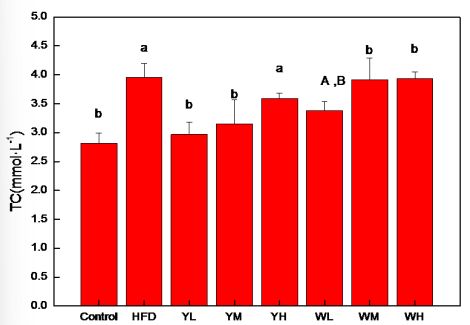
Fig 1-6 Effect of pine nut oil and pine nut oil encapsulated powder on serum TC content
(A--Significant difference vs. Control, p<0.05; a--Extremely significant difference vs. Control, p<0.01; B--Significant difference vs. HFD, p<0.05; b--Extremely significant difference vs. HFD, p<0.01)
2 Effect on Triglyceride (TG)
This study investigated the inhibitory effect of pine nut oil and pine nut oil encapsulated powders on high-fat induced elevated blood TG levels by measuring serum TG content.
Experimental results showed that TG levels in the HFD and YH groups were extremely significantly higher than the Control group (p<0.01), and the WH group was significantly higher than the Control group (p<0.05); TG levels in the Control and WL groups were extremely significantly lower than the HFD group (p<0.01), and the YL, YM and WM groups were significantly lower than the HFD group (p<0.05).
The results demonstrate that high-fat stimulation extremely significantly increases serum TG levels (1.67 times that of the blank control group). Low-dose pine nut oil encapsulated powders extremely significantly reduce TG levels to match the blank control group; low/medium-dose pine nut oil and medium-dose pine nut oil encapsulated powders also significantly alleviate TG elevation, with less pronounced effects than low-dose pine nut oil encapsulated powders.
TG is transported in blood bound to chylomicrons (CM) and very low-density lipoprotein (VLDL). Unsaturated fatty acids in pine nut oil directly inhibit TG synthesis, or reduce TG content by suppressing VLDL synthesis and secretion. This study confirms that pine nut oil and its encapsulated powders effectively reduce TG levels and enhance blood lipid metabolism under high-fat stimulation.

Fig 1-7 Effect of pine nut oil and pine nut oil encapsulated powder on serum TG content
(A--Significant difference vs. Control, p<0.05; a--Extremely significant difference vs. Control, p<0.01; B--Significant difference vs. HFD, p<0.05; b--Extremely significant difference vs. HFD, p<0.01)
3 Effect on High-Density Lipoprotein Cholesterol (HDL-C)
This study investigated the regulatory effect of pine nut oil and pine nut oil encapsulated powders on high-fat induced changes in blood HDL-C levels by measuring serum HDL-C content.
Experimental results showed that HDL-C levels in the HFD group were extremely significantly lower than the Control group (p<0.01), and all treatment groups were extremely significantly higher than the HFD group (p<0.01).
The results demonstrate that high-fat stimulation extremely significantly reduces serum HDL-C levels (0.5 times that of the blank control group). Both pine nut oil and its encapsulated powders extremely significantly alleviate HDL-C reduction, with no significant differences between dose groups.
Unsaturated fatty acids in pine nut oil bind to bile-secreted apolipoproteins to form HDL-C, which enters liver cells to form cholic acid for intestinal excretion, thereby lowering blood lipids. Elevated HDL-C also accelerates TC conversion, relieving the metabolic burden caused by high-fat intake.
This study confirms that pine nut oil and its encapsulated powders effectively increase HDL-C levels and enhance blood lipid metabolism under high-fat stimulation.
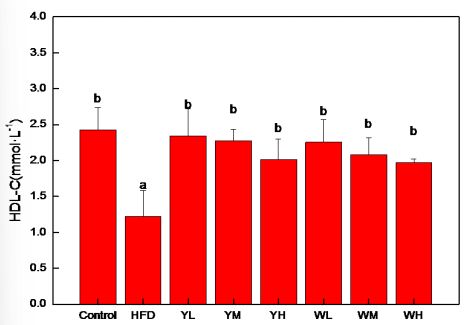
Fig 1-8 Effect of pine nut oil and pine nut oil encapsulated powder on serum HDL-C content
(A--Significant difference vs. Control, p<0.05; a--Extremely significant difference vs. Control, p<0.01; B--Significant difference vs. HFD, p<0.05; b--Extremely significant difference vs. HFD, p<0.01)
4 Effect on Low-Density Lipoprotein Cholesterol (LDL-C)
This study investigated the inhibitory effect of pine nut oil and pine nut oil encapsulated powders on high-fat induced elevated blood LDL-C levels by measuring serum LDL-C content.
Experimental results showed that LDL-C levels in the HFD and WH groups were extremely significantly higher than the Control group (p<0.01), and the WL and WM groups were significantly higher than the Control group (p<0.05); all groups except WH showed extremely significant differences vs. HFD (p<0.01), and the WH group was significantly lower than the HFD group (p<0.05).
The results demonstrate that high-fat stimulation extremely significantly increases serum LDL-C levels (1.68 times that of the blank control group). All doses of pine nut oil extremely significantly alleviate LDL-C elevation; low and medium-dose pine nut oil encapsulated powders exert moderate alleviating effects (with significant differences vs. Control), while high-dose pine nut oil encapsulated powders show no significant effects.
Unsaturated fatty acids in pine nut oil enhance hepatic cholesterol uptake, reduce LDL oxidation sensitivity, and boost LDL receptor (LDLR) activity to lower serum cholesterol. LDL transports cholesterol throughout the body, promoting vascular deposition and atherosclerosis. This study confirms that pine nut oil and its encapsulated powders effectively reduce LDL-C levels and enhance blood lipid metabolism under high-fat stimulation.
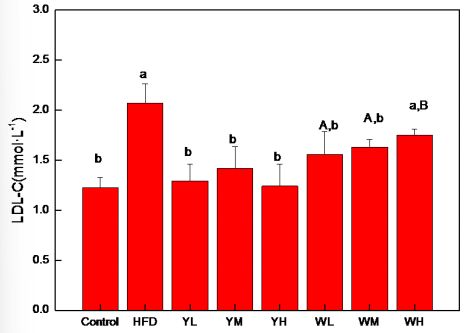
Fig 1-9 Effect of pine nut oil and pine nut oil encapsulated powder on serum LDL-C content
(A--Significant difference vs. Control, p<0.05; a--Extremely significant difference vs. Control, p<0.01; B--Significant difference vs. HFD, p<0.05; b--Extremely significant difference vs. HFD, p<0.01)
