
Which Vegetable Oil Is Best for Skin? Lab Data from 6 Oils Tested
May 17, 2026
The Formulator’s Guide to Botanical Oils for Transparent Soap (7 Oils Tested)
May 21, 2026From Traditional Remedy to Clinical Skincare: How Evening Primrose Oil Became a Gold-Standard Cosmetic Ingredient
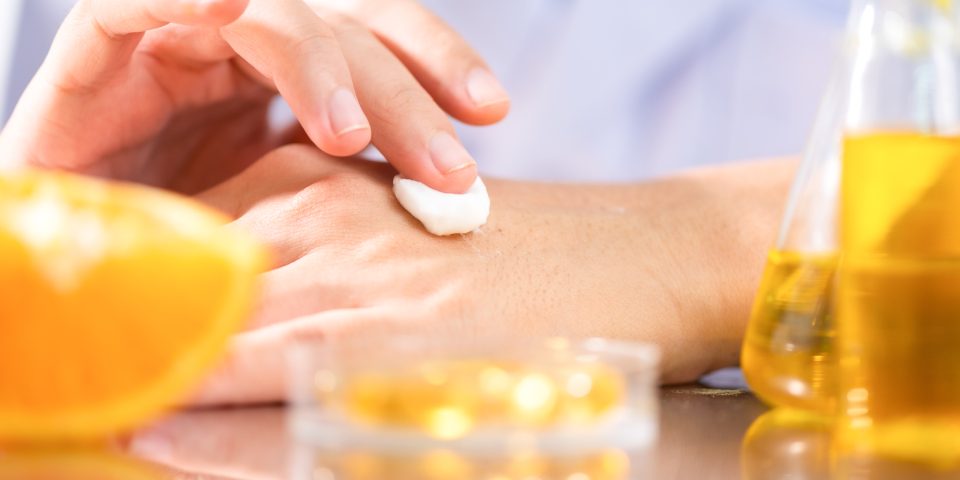
Evening primrose oil — Oenothera biennis L. — has been called “the King’s Best Medicine” since its introduction to Europe in 1619. But what does the science actually say about its use in modern cosmetics? A 2007 research review by the Nanjing Institute for the Comprehensive Utilisation of Wild Plants provides one of the most detailed looks at evening primrose oil’s skin biology, clinical trial data, and proven nutritive cream formulations. Here’s what B2B skincare formulators need to know.
What Makes Evening Primrose Oil Special for Skin?
Evening primrose oil contains two primary unsaturated fatty acids: linoleic acid (LA, ~70–75%) and gamma-linolenic acid (GLA, 6–9%). Of these, GLA is the more pharmacologically significant — and it is notably rare in the plant kingdom. Most vegetable oils contain linoleic acid, but very few contain GLA at meaningful concentrations.
GLA is metabolised in the body to dihomo-gamma-linolenic acid (DGLA), a direct precursor of prostaglandin E1 (PGE1) — a signalling molecule that exerts anti-inflammatory, vasodilatory and platelet-regulating effects. This is the biochemical foundation of evening primrose oil’s skin activity. When applied topically or ingested, GLA from evening primrose oil enters the skin’s phospholipid membrane structure, influencing cell membrane fluidity and the skin’s inflammatory response.
Key distinction: Evening primrose oil is one of the few natural ingredients where the active compound (GLA) is directly quantifiable via Certificate of Analysis — making it one of the most scientifically defensible botanical skin actives available for B2B ingredient procurement.
Five Evidence-Based Skin Benefits of Evening Primrose Oil
The Nanjing Institute review and supporting clinical literature document the following mechanisms and observed effects:
Barrier Repair & Anti-Inflammation
GLA converts to PGE1, which inhibits inflammatory mediators and strengthens the skin’s lipid barrier. Deficiency of GLA can cause skin rash and metabolic disorders — GLA supplementation reverses this.
Wound & Burn Healing
Evening primrose oil accelerates post-surgical wound healing and treats burn injuries. Active compounds are absorbed in small doses through the skin into the bloodstream rapidly.
Deep Moisturising & Skin Softening
Rich in linoleic acid, vitamin E, B-complex vitamins, niacin, folic acid, and beta-sitosterol. Trace minerals (zinc, copper, iron) promote blood microcirculation and new cell metabolism.
Pigmentation & Brightening
Inhibits melanin accumulation. German patents from 1975 documented evening primrose oil reducing facial pigmentation spots — faster absorption than other emollients tested.
Anti-Ageing & Elasticity
Vitamin E in evening primrose oil increases skin microcapillary blood flow, helps facial freckles fade, and inhibits the skin ageing process — including declining elasticity and皮脂 gland function.
X-Ray & UV Skin Protection
Polyunsaturated fatty acids in evening primrose oil protect skin from X-ray radiation damage and reduce moisture loss from UV exposure, per national standard testing.
Human Clinical Data: What the Trials Show
The Nanjing Institute review and cited clinical studies provide the following human trial data — all conducted in China with institutional oversight:
Tinea Pedis (Athlete’s Foot) Trial
Yin Xiuzhi et al. (1989, n=563): 15% evening primrose oil tincture applied topically for tinea pedis (athlete’s foot). Results: 70.5% cure rate with an average healing time of 9 days. Control group (n=120) using the same tincture base without evening primrose oil: 31.7% cure rate. The difference was statistically significant. In vitro testing confirmed inhibition of 10 common pathogenic fungi. No adverse reactions were observed.
Human Patch Test (n=10)
Closed patch testing on healthy volunteers found zero erythema or oedema responses over the observation period, confirming the finished nutritive cream causes no primary skin irritation.
Human Use Trial (n=600+)
Over several years of formulation development, the nutritive cream was trialed by more than 600 human users with consistent findings:
- Fast skin absorption — described as comfortable with a fine, smooth skin feel
- Good compatibility with skin — no adverse reactions reported
- Good oil sensation without greasiness
- Significant functional improvement for severely keratinised and rough skin
- Effective itch relief for sensitive and irritated skin
Anti-Photo-Toxicity Test
Human volunteer phototoxicity assessment concluded that the evening primrose oil nutritive cream produced no phototoxic reactions — making it suitable for daytime use in conjunction with sun exposure.
Safety Data: Animal Tests & Regulatory Compliance
The Nanjing Institute formulation underwent full animal safety testing before human trials:
| Test | Subject | Result | Classification |
|---|---|---|---|
| Acute Oral Toxicity | Mouse | LD50 > 10 g/kg body weight | Actual non-toxic |
| Acute Skin Irritation | Rabbit | Primary irritation score: 0.3125 | Non-irritating |
| Repeated Skin Irritation | Rabbit | Irritation index: 0 (pathological score 0–4) | Non-irritating |
| Eye Irritation | Rabbit | No ocular irritation response | Non-irritating |
| Phototoxicity | Human (n=10) | No phototoxic reactions observed | Safe for daytime use |
The complete product formulation was tested by the Jiangsu Provincial Health and Epidemic Prevention Station per Chinese national standards GB 7919-87 (Cosmetic Safety Evaluation) and GB 7918-87 (Hygiene Standards). All results — including lead, mercury, arsenic, total bacterial count, Pseudomonas aeruginosa, fecal coliform, Staphylococcus aureus — met or were well below national limits.
The evening primrose oil cosmetics research series was awarded the Commercial Ministry Science and Technology Progress Second Prize in 1993 — a significant institutional validation of both the formulation science and the commercial viability of evening primrose oil as a cosmetic ingredient.
Proven Nutritive Cream Formulation
The Nanjing Institute developed a stable nutritive cream formula that achieved all safety, stability and efficacy endpoints. The full ingredient breakdown:
Evening Primrose Oil Nutritive Cream — Working Formula
| Ingredient | Amount (% w/w) | Function |
|---|---|---|
| Evening Primrose Oil | 6% | Active — GLA skin repair, moisturising |
| Stearic Acid | 2% | Emollient, structurant |
| Glycerin | 10% | Humectant — moisture retention |
| Monoglyceride | 2% | Co-emulsifier, stabiliser |
| Isopropyl Palmitate | 3% | Light emollient, smooth feel |
| Emulsifier (HR-S type) | 2.2% | Primary emulsifier — fine, lustrous texture |
| Cetyl Alcohol | 2.4% | Thickener, emollient |
| Vitamin E | 0.8% | Antioxidant, skin nutrition, UV protection |
| Herbal Extract (Dang Gui + Bai Zhi) | 8% | Active botanicals — blood circulation, pigmentation |
| Pearl Hydrolysate | q.s. | Skin brightening, micronutrient minerals |
| Preservative | q.s. | Microbial stability |
| Deionised Water | to 100% | Carrier |
Formulation Stability Data
The finished cream passed all stability benchmarks:
- Freeze-thaw test: No oil separation, grain, or water exudation after 24h at -10°C and return to room temperature
- Heat stability: No changes after 24h at 40°C under microscope vs. control
- Centrifugation: No water separation at 4000 rpm for 0.5h
- 12-month ambient storage: No abnormal changes in appearance, texture or efficacy
- pH: 6.7 — within ideal skin compatibility range
Evening Primrose Oil Product Series: Beyond the Cream
The Nanjing Institute’s research programme extended beyond a single nutritive cream to a complete product line, demonstrating the versatility of evening primrose oil across multiple cosmetic formats:
Nutritive Cream
For daily hydration and anti-ageing. Applied morning and evening after cleansing with gentle massage until fully absorbed. For face and hands.
Nourishing Essence Lotion
Lightweight format for all skin types. Increases skin elasticity and brightens complexion. Applied to cotton pad or clean hands after cleansing.
Moisturising Emulsion
Fast-absorbing emulsion. Prevents skin ageing, maintains natural moisture and softness. For face and neck with gentle massage.
Facial Cleansing Cream
Rich foam, strong de-greasing power. Ideal for oily and acne-prone skin. Removes pore impurities, prevents acne and eczema, leaves skin refreshed.
Body Bathing Liquid
Rich natural nutrients that improve skin texture and promote blood circulation. Fresh, aromatic scent. Leaves skin soft and comfortable after bathing.
Skin Treatment Oil
Concentrated evening primrose oil treatment for dry, damaged or sensitive skin. For targeted application on rough or irritated areas.
B2B Insights: What This Research Means for Your Brand
Quantifiable Claims
GLA content is directly measurable by GC analysis. Your COA is your mechanism claim — evening primrose oil is one of the few botanicals where the active compound is independently verifiable.
Safety Backed by Trials
Full animal safety battery + human patch + phototoxicity tests + 600-person use trial. Few botanical ingredients have this level of human clinical data supporting cosmetic safety.
Proven Stability
12-month ambient stability confirmed. Vitamin E antioxidant protection at 0.8% is sufficient for the 6% oil phase. Production process is standard O/W emulsion — no specialist equipment required.
Regulatory Acceptance
Passes Chinese national cosmetic safety standards (GB 7919-87). Evening primrose oil has regulatory recognition across EU, US and Asia-Pacific markets for both cosmetic and nutraceutical use.
Frequently Asked Questions
What is GLA and why is it important in evening primrose oil?
Gamma-linolenic acid (GLA, C18:3 n-6) is a rare omega-6 fatty acid found in only a handful of plant oils. In the body, GLA converts to dihomo-gamma-linolenic acid (DGLA), which is the direct precursor of prostaglandin E1 (PGE1) — a anti-inflammatory and vasodilatory signalling molecule. Evening primrose oil is one of the richest natural sources of GLA (6–9%), making it pharmacologically distinct from commodity vegetable oils. GLA deficiency is associated with skin rashes and metabolic disorders; supplementation restores normal skin function.
Is evening primrose oil safe for sensitive skin?
Yes — the research shows no skin irritation in rabbit acute skin tests, repeated skin irritation tests, rabbit eye irritation tests, or human patch tests (n=10). No phototoxic reactions were observed in human volunteers. The 6% concentration used in the nutritive cream formulation is well within the effective range while maintaining a strong safety margin. Evening primrose oil’s anti-inflammatory PGE1 pathway also actively supports sensitive and reactive skin types.
What extraction method does TongyuBio use for evening primrose oil?
TongyuBio uses supercritical CO₂ (SC-CO₂) extraction for evening primrose oil. This clean, low-temperature process avoids organic solvents and preserves heat-sensitive fatty acids including GLA, which can be degraded by conventional hot-press or hexane-extraction methods. SC-CO₂ extraction produces a cleaner, higher-purity oil with a longer shelf life — particularly important for unsaturated fatty acid-rich oils like evening primrose.
Can evening primrose oil be used in both daytime and nighttime formulations?
The human phototoxicity trial confirmed no phototoxic reactions, indicating the finished cream is safe for daytime use. However, formulators should note that evening primrose oil’s vitamin E content (included in the Nanjing Institute formula at 0.8%) provides some antioxidant protection against UV-induced skin damage — making it particularly well-suited to daytime moisturisers and day creams. For sensitive-skin or inflammation-focused formulations, evening primrose oil is equally effective in overnight repair formulations.
What is the minimum GLA specification to look for in evening primrose oil for cosmetics?
The Nanjing Institute formula used evening primrose oil with GLA content above 7.5% — which meets or exceeds the Chinese national standard minimum of 6% GLA. For cosmetic and nutraceutical formulations targeting anti-inflammatory or skin-barrier claims, TongyuBio recommends a minimum GLA specification of 7.5% as standard, with 8–9% available for premium positioning. Always request lot-level GC fatty acid profile on the Certificate of Analysis to verify GLA content matches your label claim.
Source High-GLA Evening Primrose Oil for Your Formulations
TongyuBio supplies SC-CO₂ extracted evening primrose oil with 7.5%+ GLA guaranteed on every batch — with full GC fatty acid profile, COA, and technical documentation for cosmetic and nutraceutical manufacturers worldwide.
Qian Xueshe, Zhang Weiming, Gu Gongping, Zhang Guanglun. Research and Development of Cosmetics of Oenothera biennis L. Oil. Chinese Wild Plant Resources. 2007;26(4):43–45. DOI: 10.3969/j.issn.1006-9690(2007)04-0043-04
Key Cited Studies
Qian Xueshe, Xiao Zhengchun. Medical Oil Plants: Oenothera biennis L. [J]. Scientific Experiment. 1984;(1):39.
Yin Xiuzhi et al. Clinical observation and analysis of Oenothera biennis L. tincture for tinea pedis (n=563) [J]. Journal of Clinical Dermatology. 1989;18(3):134–135.
Dong Yunfa. Botanical Cosmetics and Formulations [M]. Beijing: Chemical Industry Press. 2005:234.
German Patent DE 2352797: Oenothera biennis L. Oil Skin Care Product. 1975.
UK Patent GB 2151924: Cold Cream with Oenothera biennis L. Oil for Medicinal Cosmetics. 1985.
Japanese Patent JP 61-178908: Novel Cosmetics Using Plant Oils Including Oenothera biennis L. 1986.
