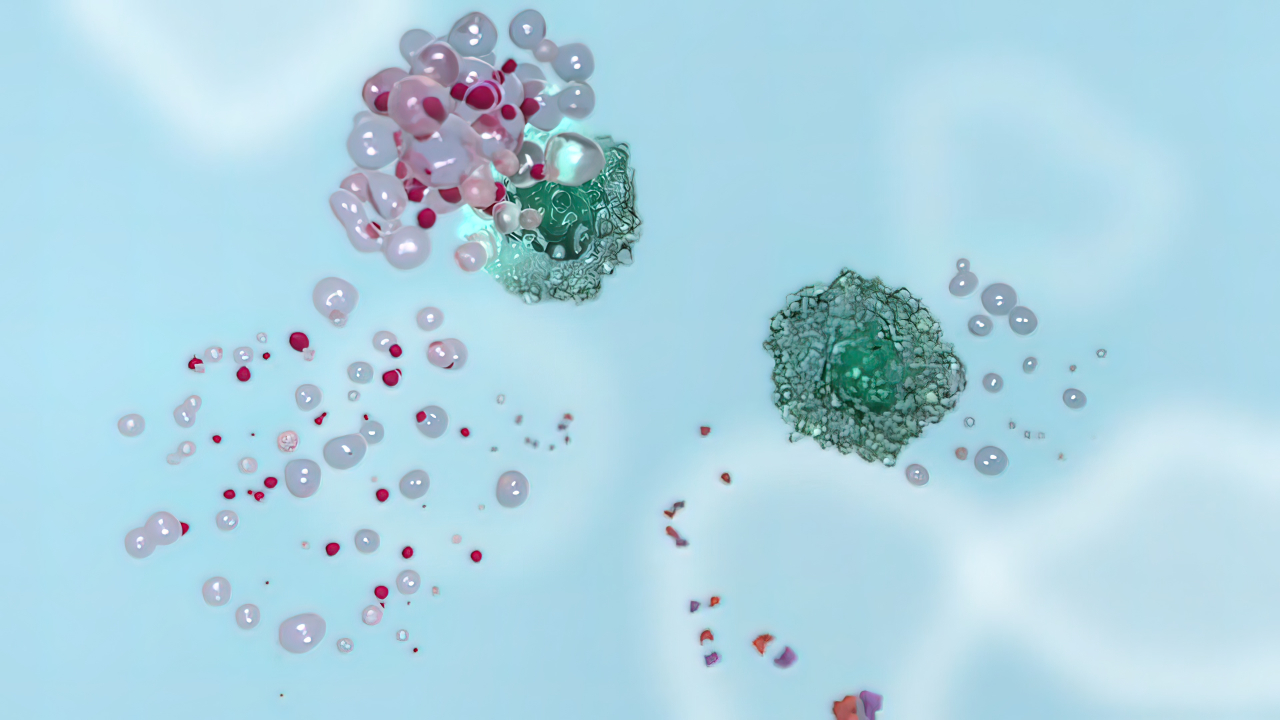
Modern pharmacological studies have confirmed that Ganoderma lucidum is a recognized natural anticancer active substance, whose core functions lie in blocking the cancer cell cycle, inhibiting tumor angiogenesis, and thereby improving the quality of life of cancer patients.
As an essential extract of Ganoderma lucidum, the anticancer efficacy of Ganoderma lucidum spore oil has attracted more attention—it has shown significant anticancer effects in both in vitro and in vivo experiments. Through three core pathways (inducing cancer cell apoptosis, inhibiting tumor angiogenesis, and regulating the cell cycle), it directly exerts cytotoxic effects or indirectly blocks tumor spread and growth.
I. Inducing Cancer Cell Apoptosis: Triggering Multi-Pathway Programmed Cell Death
Apoptosis is a genetically regulated process of autonomous programmed cell death, which is a key mechanism for maintaining internal homeostasis of the organism. In the mitochondria-mediated apoptotic pathway, Bcl-2 family proteins are the core factors regulating the permeability of the outer mitochondrial membrane. They promote the release of apoptotic factors into the cytoplasm, thereby activating caspases, and ultimately inducing the formation of apoptotic bodies to initiate the cancer cell death program.
The role of Ganoderma lucidum spore oil in inducing cancer cell apoptosis has been confirmed by multiple studies, and its specific mechanisms exhibit multi-pathway characteristics:
1. Regulating the balance of apoptotic proteins
In human non-small cell lung cancer A549 cells, breast cancer MDA-MB-231 cells, and gastric adenocarcinoma BGC-823 cells, Ganoderma lucidum spore oil can significantly reduce the ratio of anti-apoptotic protein Bcl-2 to pro-apoptotic protein Bax, and simultaneously increase the activity of caspase-3 enzyme, directly triggering cancer cell apoptosis.
2. Regulating signaling pathways
Lipid extracts of Ganoderma lucidum spores can downregulate the phosphorylation levels of ERK1/2 and Akt pathway proteins in human monocytic leukemia THP-1 cells, activate the JNK1/2 pathway, and then synchronously trigger the activation of three key apoptotic enzymes (caspase-3, caspase-8, and caspase-9) to enhance the apoptotic effect.
3. Activating transcription factors and regulating gene expression
Studies on human hepatocellular carcinoma HepG2 cells, non-small cell lung cancer A549 cells, and colorectal cancer HCT116 cells have confirmed that Ganoderma lucidum spore oil can promote the phosphorylation of NF-κB in cancer cells and initiate the caspase-3-mediated apoptotic program; in vivo experiments further show that it can indirectly enhance the pro-apoptotic effect by downregulating the expression of miR-21 in human lung adenocarcinoma SPC-A1 cells and promoting the expression of tumor suppressor genes PTEN and PDCD4.
II. Inhibiting Angiogenesis: Cutting Off the Nutritional Supply Pathway of Tumors
Vascular Endothelial Growth Factor (VEGF) is the core regulatory factor of tumor angiogenesis and a key target for clinical cancer treatment. As a specific glycoprotein, after VEGF binds to specific receptors on the surface of endothelial cells, it can both promote the migration of vascular endothelial cells and activate two major signaling pathways (Ras/RAF/ERK and PI3K/Akt), thereby accelerating the proliferation of endothelial cells and inducing neovascularization—this process is the core guarantee for tumors to obtain nutrients and oxygen, directly supporting tumor growth and metastasis.
Ganoderma lucidum spore oil inhibits tumor angiogenesis through multiple mechanisms, showing clear time-dependent and dose-dependent characteristics:
1. Downregulating core pro-angiogenic factors
Ganoderma lucidum spore oil can directly inhibit the expression of VEGF in tumor cells and significantly slow down the progression of malignant tumors such as lung cancer and liver cancer. In vitro migration experiments on human gastric adenocarcinoma BGC-823 cells show that the number of migrating cancer cells is significantly reduced after treatment with Ganoderma lucidum spore oil; RT-PCR results confirm that it can simultaneously downregulate the expression of VEGF and matrix metalloproteinases (MMP2, MMP9), reduce the degradation ability of the extracellular matrix, and at the same time upregulate the expression of tissue inhibitor of metalloproteinases-2 (TIMP-2). By inhibiting the zinc ion function in the active center of MMPs, it blocks the migration and invasion of cancer cells.
2. Dual regulation of angiogenesis balance
High-concentration Ganoderma lucidum spore oil can not only inhibit VEGF expression at the transcriptional level but also significantly increase the expression of its inhibitory factor TSP-1. This dual effect of "inhibiting pro-cancer factors + increasing anti-cancer factors" has been verified in the nude mouse breast cancer MDA-MB-231 xenograft model, which can effectively block the formation of tumor neovascularization.
At present, inhibiting VEGF expression has been confirmed as an important new pathway for the anticancer effect of Ganoderma lucidum spore oil, but the specific molecular regulatory details still need further in-depth research.
III. Regulating the Cell Cycle: Blocking the Unlimited Proliferation of Cancer Cells
The precise regulation of the cell cycle by enzymes is the basis for the abnormal proliferation of cancer cells. Among them, the abnormal activity of topoisomerase and telomerase is the key "driver" for cancer cells to achieve unlimited proliferation, and also the core target of clinical chemotherapeutic drugs—Ganoderma lucidum spore oil can block the cell cycle process by targeting and regulating the activity of these two types of enzymes.
1. Inhibiting topoisomerase activity
The core function of topoisomerase is to regulate the superhelical structure of DNA. Its abnormal activity will lead to DNA structure disorder and block replication forks, ultimately inhibiting the proliferation of tumor cells. Both in vitro and in vivo experiments have confirmed that Ganoderma lucidum spore oil can effectively inhibit the activity of topoisomerase I and II, and simultaneously reduce the level of cycle regulatory protein Cyclin D1, firmly blocking cancer cell proliferation in the G1 phase.
2. Inhibiting telomerase activity
According to the telomere theory, DNA replication is accompanied by telomere shortening, while the telomerase activity in cancer cells is abnormally increased, which can repair the telomeres lost during DNA replication, enabling cancer cells to proliferate indefinitely.
Studies have found that lipid-soluble extracts of Ganoderma lucidum spores can significantly inhibit the telomerase activity of hepatocellular carcinoma cells in tumor-bearing mice and block human hepatocellular carcinoma HepG2 cells in the G2/M phase; meanwhile, Ganoderma lucidum spore oil modified by high-pressure homogenization nanonization can arrest human gastric adenocarcinoma MGC-803 cells in the G0/G1 phase, thereby preventing the proliferation of cancer cells.
In summary, Ganoderma lucidum spore oil exerts anticancer effects through the triple synergistic mechanism of "apoptosis induction + angiogenesis inhibition + cycle blockage", providing a solid pharmacological basis for its use as an adjuvant cancer treatment product. With the in-depth research, the precise regulatory mechanism of its specific action targets may be further clarified, providing new ideas for cancer prevention and treatment.