
Is Your Sea Buckthorn Oil Genuine? How Glyceride Fingerprinting Detects Adulteration
June 8, 2026
Synergistic Antioxidant Power: How Reishi, Hericium & Corn Silk Polysaccharides Work Together
June 19, 2026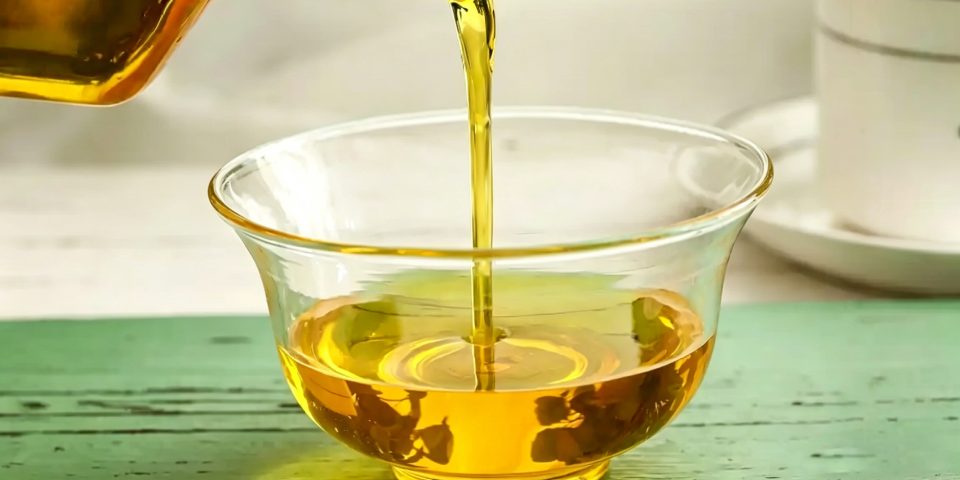
What Is Goji Seed Oil?
Goji seed oil is a cold-pressed or solvent-extracted functional oil derived from the seeds of Lycium barbarum — the wolfberry plant native to northwest China. While the bright red berries have long been celebrated in traditional medicine, the seeds represent a largely untapped nutritional resource.
During the commercial processing of goji berry juice and wine, large quantities of seeds accumulate as processing by-products. Extracting oil from these seeds is not only economically valuable — it also supports zero-waste processing. The result is a rich, amber-colored oil with a notable concentration of essential fatty acids, fat-soluble vitamins, and bioactive pigments.
A peer-reviewed review by researchers at the Shandong Institute of Light Industry and the Chinese Academy of Inspection and Quarantine (CAIQ) consolidates the scientific evidence on goji seed oil’s composition, physiological functions, and extraction technologies — providing a scientific foundation for its use in functional foods, nutraceuticals, and cosmeceuticals.
Key finding: Goji seed oil contains over 80% unsaturated fatty acids, with linoleic acid (omega-6, C18:2) making up 62.6% of total fatty acids — one of the highest concentrations among commercially available plant seed oils.
Fatty Acid & Bioactive Composition
The lipid profile of goji seed oil is defined by a high proportion of polyunsaturated fatty acids. The oil contains 21 identified fatty acid species, with the following dominant profile:
| Fatty Acid | Type | Content (% of total FA) | Key Role |
|---|---|---|---|
| Linoleic acid (C18:2, ω-6) | PUFA | 62.6% | Lipid metabolism, cardiovascular support, skin barrier |
| Oleic acid (C18:1, ω-9) | MUFA | 16.7% | Anti-inflammatory, cardiac health |
| Palmitic acid (C16:0) | SFA | 10.4% | Structural lipid |
| Total unsaturated FA | MUFA + PUFA | >80% | Metabolic and cellular health |
Beyond fatty acids, goji seed oil contains a clinically relevant suite of bioactive compounds:
Vitamin E (Tocopherols)
A potent lipid-soluble antioxidant that protects cell membranes from peroxidation, maintains skin integrity, and extends oil shelf life.
Beta-Carotene
Pro-vitamin A precursor and carotenoid antioxidant; supports visual health, immune function, and gives goji oil its characteristic amber colour.
Zeaxanthin Dipalmitate
A carotenoid ester unique to wolfberry; linked to macular protection, immune modulation, and anti-aging activity.
Superoxide Dismutase (SOD)
A key endogenous antioxidant enzyme found in goji preparations; studies show goji supplementation raises SOD activity in animal models.
Phytosterols
Plant sterols that competitively inhibit cholesterol absorption in the gut — directly supporting the lipid-lowering mechanism of goji seed oil.
Minerals (Ca, Mg, Na, Fe)
Trace mineral co-factors present in goji seed oil that support enzymatic activity and micronutrient completeness in formulations.
Five Evidence-Backed Physiological Functions
1. Anti-Hyperlipidemia: Lowering Blood Lipids
Cardiovascular disease risk is strongly linked to elevated triglycerides (TG), total cholesterol (TC), and LDL-C. The high linoleic acid content of goji seed oil is central to its lipid-modulating activity.
In a rat model study, oral administration of goji seed oil at doses of 0.1 g/kg·bw, 0.3 g/kg·bw, and 0.6 g/kg·bw produced dose-dependent reductions in serum TG, TC, and LDL-C, alongside increases in beneficial HDL-C levels (P<0.05 at 0.6 g/kg). The phytosterol fraction is thought to contribute via competitive inhibition of intestinal cholesterol absorption, while linoleic acid accelerates cholesterol clearance through LDL receptor upregulation.
📊 Key result: At 0.6 g/kg·bw dosing, goji seed oil significantly reduced serum triglyceride levels (P<0.05) compared with control animals, with no adverse effects reported.
2. Hypoglycemic Activity: Blood Sugar Support
A diabetic animal model study investigated the anti-hyperglycemic potential of goji seed oil. Results showed that oral supplementation reduced fasting blood glucose levels in diabetic mice compared with controls, with an observed promotion of pancreatic beta-cell activity and insulin sensitivity.
This activity is attributed to linoleic acid’s role in improving insulin receptor sensitivity, alongside beta-carotene’s anti-inflammatory effect in pancreatic tissue. Goji seed oil represents an emerging complementary ingredient for glucose-management nutraceutical formulations.
3. Antioxidant Protection
Vitamin E (tocopherols) are among the most well-characterised lipid-phase antioxidants in the literature. In goji seed oil, VE works synergistically with beta-carotene and zeaxanthin dipalmitate to:
- Neutralise reactive oxygen species (ROS) in cell membranes
- Prevent lipid peroxidation and membrane structural damage
- Protect mitochondrial integrity and reduce apoptotic signalling
- Preserve DNA from oxidative lesions
Wistar rat studies demonstrated that goji seed oil supplementation reversed the SOD depression caused by oxidative challenges, suggesting a systemic upregulation of endogenous antioxidant defences — not just passive scavenging.
4. Anti-Fatigue Effects
Fatigue is a complex physiological state involving oxidative stress, glycogen depletion, lactic acid accumulation, and free radical burden on muscle tissue. A study using C57BL/6 mice subjected to forced swimming (anti-fatigue model) evaluated the effects of goji seed oil supplementation.
At a dose of 0.2 g/kg·bw, goji seed oil supplementation:
- Significantly prolonged time-to-exhaustion in swimming tests
- Reduced serum blood urea nitrogen (BUN) accumulation — a key fatigue marker
- Decreased blood lactic acid levels post-exercise
- Increased hepatic and muscle glycogen stores
These results position goji seed oil as a credible functional ingredient for sports nutrition and energy management product lines.
5. Vision Support
The carotenoid fraction of goji seed oil — particularly zeaxanthin dipalmitate and beta-carotene — has direct relevance to visual health. These compounds accumulate in the macular region of the retina, where they act as light-filtering pigments and antioxidants.
Studies on goji preparations report improvements in immune system function associated with visual system protection. Vitamin E content additionally contributes to retinal cell membrane integrity — making goji seed oil a relevant ingredient for vision-focused formulations targeting aging populations.
Extraction Methods: Which One Is Right for Your Application?
The extraction method chosen for goji seed oil directly impacts yield, purity, bioactive retention, and suitability for food-grade and pharmaceutical-grade applications. The review evaluates four principal approaches:
Cold-Press (Expeller)
- No solvent residue
- Simple equipment
- Clean label suitable
- Lower yield (13.4–14%)
- Higher pressure → heat generation
- Best for: premium food-grade oil
Solvent Extraction (Hexane)
- High yield
- Established industrial process
- Solvent residue concerns
- Not suitable for food-grade without desolventizing
- Environmental impact
- Best for: industrial / cosmetic applications
Supercritical CO₂ Extraction
- Yield up to ~90%
- No chemical solvent residue
- Low temperature → bioactive retention
- Pharmaceutical-grade quality
- Optimal: 20–30 MPa, 35–45°C, 40 kg/h
- Best for: nutraceuticals, pharma, premium brands
Ultrasonic-Assisted Extraction
- Fast processing: 6 min at 60°C, 300W
- Yield: 22.35%
- Low temperature, preserved bioactives
- Lower energy vs. supercritical CO₂
- Limitation: batch scale; requires solvent
- Best for: R&D, speciality production
| Method | Yield | Solvent-Free? | Bioactive Retention | Scale | Best Application |
|---|---|---|---|---|---|
| Cold-press | 13.4–14% | ✅ Yes | Good | Industrial | Clean-label food-grade oil |
| Hexane solvent | High | ❌ No | Moderate | Industrial | Cosmetics, non-food industrial |
| Supercritical CO₂ | ~90% | ✅ Yes | Excellent | Industrial | Nutraceuticals, pharma-grade |
| Ultrasonic-assisted | 22.35% | Partial | Good | Batch / R&D | Specialty, R&D prototyping |
⚠️ Formulator note: For applications where bioactive integrity is critical (VE, beta-carotene, zeaxanthin), supercritical CO₂ extraction is the gold standard. The low process temperature (35–45°C) preserves heat-sensitive carotenoids and tocopherols that would degrade under conventional high-heat expelling or solvent-stripping processes.
Supercritical CO₂ Extraction: Optimised Parameters
The review details optimised process parameters for supercritical CO₂ extraction of goji seed oil based on the combined literature:
| Parameter | Optimised Value | Effect on Yield/Quality |
|---|---|---|
| Extraction pressure | 20–30 MPa (optimal: 30 MPa) | Higher pressure increases CO₂ density → greater oil solubility |
| Temperature | 35–45°C (optimal: 313–318 K) | Low temp preserves carotenoids and tocopherols |
| CO₂ flow rate | 40 kg/h | Balances throughput with complete extraction |
| Extraction time | 3.5 h | Near-complete oil recovery |
| Reported yield | ~90% | Far exceeds cold-press (14%) and hexane (industry average) |
B2B Applications Across Industries
The functional profile of goji seed oil maps cleanly onto several commercial sectors where high-purity, bioactive-rich plant oils are in strong demand:
Nutraceuticals & Softgels
High linoleic acid + VE + beta-carotene combination is ideal for cardiovascular health, antioxidant, and vision-support softgel capsule formulations.
Sports Nutrition
Anti-fatigue activity with glycogen-sparing and lactic-acid-reducing effects positions goji seed oil as a functional fat ingredient for performance recovery products.
Cosmeceuticals & Skincare
Linoleic acid (62.6%) is a gold-standard active for barrier restoration. Combined with VE and carotenoids, goji seed oil suits premium anti-aging facial oils and serums.
Functional Food & Beverages
GRAS-compatible, clean-label, rich flavor profile. Suitable for heart-health cooking oils, functional snack coatings, and premium beverage emulsions.
Eye Health Formulations
Zeaxanthin dipalmitate + beta-carotene complement standardised lutein/zeaxanthin combinations in macular health and vision-support supplement lines.
Circular Ingredient Sourcing
Derived from by-products of goji juice and wine manufacturing — goji seed oil supports ESG and zero-waste supply chain commitments without sacrificing potency.
Frequently Asked Questions
What is the primary fatty acid in goji seed oil?
Linoleic acid (C18:2, omega-6) is the dominant fatty acid at 62.6% of total fatty acids. This is followed by oleic acid (16.7%) and palmitic acid (10.4%). The total unsaturated fatty acid content exceeds 80%, which accounts for much of the oil’s lipid-lowering and membrane-protective bioactivity.
How does goji seed oil differ from goji berry extract?
Goji berry extract is typically a water-soluble polysaccharide-rich product derived from the fruit pulp. Goji seed oil is a lipid extract from the seeds, rich in fat-soluble bioactives: linoleic acid, tocopherols (VE), beta-carotene, zeaxanthin dipalmitate, and phytosterols. They have complementary — not redundant — bioactive profiles.
Which extraction method produces the highest-quality goji seed oil?
Supercritical CO₂ extraction produces the highest quality for nutraceutical and pharmaceutical applications. At optimised parameters (30 MPa, 313–318 K, 40 kg/h, 3.5 h), it achieves ~90% oil yield while preserving heat-sensitive carotenoids and tocopherols that degrade under conventional extraction methods.
Is goji seed oil suitable for cosmetic formulations?
Yes. The high linoleic acid content (62.6%) makes goji seed oil a particularly valuable cosmetic active for barrier repair and anti-inflammatory applications. Vitamin E provides antioxidant stability both in the formulation and in the skin. It is suitable for facial oils, serums, and hair care formulations targeting moisture retention and oxidative damage.
What are the anti-fatigue mechanisms of goji seed oil?
Animal studies show that goji seed oil supplementation (0.2 g/kg·bw) increases hepatic glycogen stores, reduces blood lactic acid and BUN accumulation during exercise, and boosts SOD antioxidant enzyme activity. These mechanisms collectively reduce oxidative stress and metabolic fatigue, extending endurance capacity in exercise models.
Can goji seed oil be sourced sustainably?
Yes. Goji seed oil is a circular economy ingredient — it is derived from seed by-products generated during commercial goji juice and wine production. Extracting oil from what would otherwise be agricultural waste generates high-value product while reducing environmental load. This makes it attractive for brands with ESG or zero-waste supply chain commitments.
Source Premium Bulk Goji Seed Oil
TongyuBio supplies pharmaceutical-grade and food-grade goji seed oil — supercritical CO₂ extracted, certificate of analysis on every batch, B2B volumes available.
Request Goji Seed Oil Sample → Talk to our ingredient specialists about formulation supportReferences
- Ma Xiaoyan, Zhang Jing et al. “Research Progress on Physiological Functions and Extraction Methods of Goji Seed Oil.” Shandong Institute of Light Industry / Chinese Academy of Inspection and Quarantine, Jinan 250014.
- Li X, Wang Y. “Lipid composition and fatty acid analysis of Lycium barbarum seed oil.” China Oils and Fats, 2000, 25(2): 53–54.
- Wan Y, Chen W. “Applications of wolfberry and its functional properties.” China Oils and Fats, 2004, 29(8): 57–58.
- Chen MF et al. “Research on goji seed oil extraction.” Food Science, 1996, 17(10): 31–33.
- Li Guoliang, Shi Junyou, Suo Yourui. “Supercritical CO₂ cell-breaking extraction of Lycium barbarum seed oil and HPLC/APCI/MS antioxidant activity determination.” Food Science and Technology, 2010, 10(12): 1172–1178.
- Liu MJ et al. “Experimental study on the effect of goji seed oil on blood lipids in rats.” Journal of Xuzhou Medical College (Natural Science), 2000, 21(4): 68–70.
- Yang Y, Tong X, Wen BC. “Effects of goji seed oil on serum SOD, MDA and GSH in C57BL/6J mice.” Harbin Medical University Journal, 2011, 33(3): 201–203.
- Su W, Li Z, Wen BC. “Experimental study on anti-fatigue effects of goji seed oil in mice.” Harbin Medical College Journal, 2004, 26(1): 19–21.
- Chen P. “Expeller pressing and functional oil extraction.” Agricultural Processing, 2006, 6: 45–46.
- Zhang JP. “Extraction of goji seed oil and blood lipid-lowering study.” MSc Thesis, Nanjing Agricultural University, 2011.
- Sun T, et al. “Study on supercritical CO₂ extraction of goji seed oil.” Journal of Sichuan University (Natural Science), 2000, 21(2): 156–158.
- Chrysanthemum H, et al. “Supercritical CO₂ extraction of sunflower seed oil: experimental study and model optimisation.” Chemical Engineering & Technology, 2004, 25(5): 11–13.
- Wang J, Zhao Y, Wang SH. “Ultrasonic-assisted supercritical CO₂ extraction of goji seed oil.” China Oils and Fats, 2011, 36(2): 39.
