
How Sea Buckthorn Seed Oil Triggers Apoptosis in Gastric Cancer Cells: In Vitro Evidence
May 4, 2026
How Sea Buckthorn Oil Transforms Toothpaste Into a Gum-Healing Powerhouse
May 8, 2026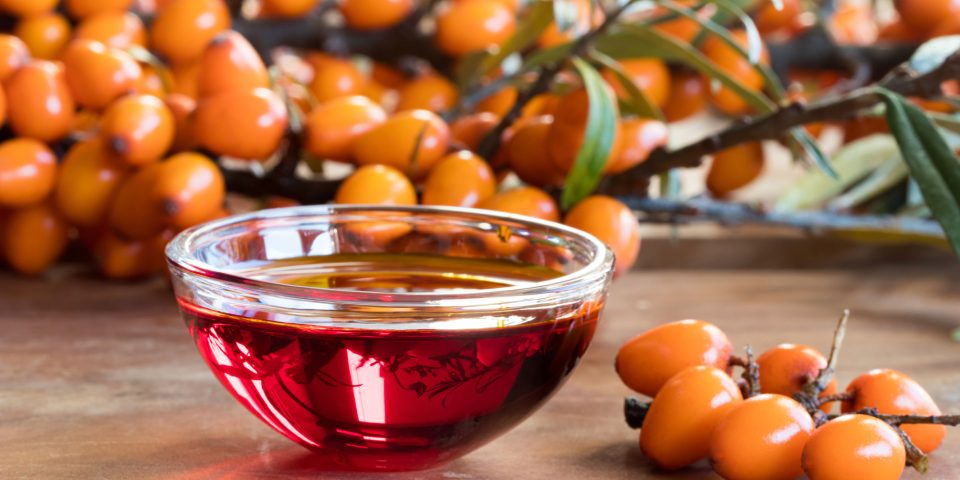
Sea buckthorn (Hippophae rhamnoides L.) is one of the few plants whose pulp oil contains exceptionally high levels of palmitoleic acid (omega-7) — a fatty acid rarely found in vegetable oils — while its seed oil is rich in alpha-linolenic acid (omega-3 ALA). Together they form a complementary nutritional duo with well-documented benefits for skin health, cardiovascular support, immune function, and more.
resources in China
in pulp oil
in seed oil
in seed oil
1. What Is Sea Buckthorn?
Sea buckthorn is a thorny shrub of the Elaeagnaceae family, classified by China’s National Health Commission as a food-medicine dual-use plant. Every part — roots, stems, leaves, flowers, fruit, and seeds — contains a rich array of nutrients and bioactive compounds, earning it the title “jewel of the plant kingdom.”
China holds roughly 90% of global sea buckthorn resources, with a total cultivated area of approximately 2.7 million hectares distributed across Northeast, Northwest, Southwest, and North China. Key production bases include Jianping County in Liaoning (66,700 ha), Wuqi County in Shaanxi (46,700 ha), and Jungar Banner in Inner Mongolia (33,000 ha).
Taxonomically, Hippophae is divided into 2 groups, 6 species, and 12 subspecies. The most commercially important is H. rhamnoides subsp. sinensis (Chinese sea buckthorn), which can be further categorised by fruit size — large-berry varieties (≥ 25 g per berry) and small-berry varieties (< 25 g per berry) — and by storage form: fresh, frozen, or dried.
2. Sea Buckthorn Fruit: Nutritional Composition
Sea buckthorn fruit is extraordinary in its nutritional breadth. Research by Qiao et al. (1988) identified the following key components per 100 g fresh fruit:
| Nutrient | Content (per 100 g) | Significance |
|---|---|---|
| Vitamin C | 825–2,500 mg | ~20× higher than citrus fruit |
| Vitamin E (tocopherol) | 120–390 mg | Potent fat-soluble antioxidant |
| Carotenoids | 3–10 mg | Pro-vitamin A; anti-oxidant pigments |
| Flavonoids | 100–600 mg | Anti-inflammatory; cardiovascular support |
| Crude fat (whole berry) | 4–12 g | Source of pulp oil and seed oil |
Beyond vitamins, sea buckthorn fruit also supplies organic acids (malic, oxalic, tartaric), minerals (Ca, P, Fe, Mg), phenolic acids, and a complete amino acid profile — making it a rare whole-food functional ingredient.
3. Sea Buckthorn Pulp Oil (Berry Oil)
Sea buckthorn pulp oil is extracted from the fruit flesh and skin. Its most distinctive feature is its exceptionally high content of palmitoleic acid (omega-7, C16:1) — a fatty acid structurally similar to human sebum, virtually absent in most vegetable oils.
3.1 Physical & Chemical Properties
At room temperature, sea buckthorn pulp oil presents as a dark orange to orange-red viscous liquid with a characteristic aroma. It tends to solidify at lower temperatures. Key physical parameters include:
| Parameter | Range / Value |
|---|---|
| Refractive index (20 °C) | 1.450–1.480 |
| Relative density (20 °C) | 0.910–0.950 |
| Iodine value | 30–80 g / 100 g |
| Saponification value | 170–210 mg / g |
| Unsaponifiable matter | 2%–5% |
| Acid value | ≤ 15 mg / g |
3.2 Fatty Acid Profile
Analysis of six commercially available pulp oils (Hou Xiao, 2016) shows a fatty acid composition distinctly different from conventional vegetable oils:
| Fatty Acid | Content Range | Type |
|---|---|---|
| Palmitic acid (C16:0) | 22.09%–37.58% | Saturated |
| Palmitoleic acid (C16:1, ω-7) | 15.67%–34.42% | Mono-unsaturated (rare) |
| Stearic acid (C18:0) | 0.86%–2.91% | Saturated |
| Oleic acid (C18:1, ω-9) | 16.94%–22.25% | Mono-unsaturated |
| Linoleic acid (C18:2, ω-6) | 6.01%–7.79% | Poly-unsaturated |
| α-Linolenic acid (C18:3, ω-3) | 2.06%–19.26% | Poly-unsaturated |
The unusually high palmitoleic acid content (up to 34%) is sea buckthorn pulp oil’s defining characteristic. This omega-7 fatty acid closely mirrors the lipid composition of human skin sebum and is extremely rare in plant-derived oils — making pulp oil highly valued in cosmetic and dermatological formulations.
3.3 Bioactive Compounds & Health Benefits
Sea buckthorn pulp oil contains far more than fatty acids. Alongside high Vitamin E (tocopherols and tocotrienols) and pro-vitamin A carotenoids, clinical and experimental studies have documented several health effects:
Che et al. (2000) confirmed that pulp oil significantly reduces inflammatory responses and modulates non-specific, humoral, and cellular immunity in animal models.
Topical application promotes healing of burns, chemical injuries (NaOH), and skin trauma in animal studies, reducing secretions and accelerating tissue regeneration.
Li et al. (1992) showed that pulp oil — rich in Vitamins E and A — fully meets cosmetic-grade requirements, offering superior skin nourishment over conventional ingredients.
Liu et al. (2020) demonstrated that pulp oil can regulate BCL-2 and BAX expression in H22 hepatoma mouse models, significantly inhibiting transplanted tumour growth.
4. Sea Buckthorn Seed Oil
Sea buckthorn seed oil is obtained from the seeds by pressing, hexane extraction, or supercritical CO₂ extraction. Depending on processing conditions, the oil ranges in colour from yellow to dark orange, sometimes with a reddish-brown hue.
4.1 Physical & Chemical Properties
| Parameter | Range (Yingyao et al., 1996) | Industry Standard (SL 493-2010) |
|---|---|---|
| Acid value | 5.8–15.0 mg/g | ≤ 15 mg/g |
| Iodine value | 153.5–157.6 g/100 g | 140–180 g/100 g |
| Refractive index (20 °C) | 1.4780–1.4794 | 1.4700–1.4800 (at 40 °C) |
| Vitamin E | 204.5–355.1 mg/100 g | ≥ 120 mg/100 g |
| Total carotenoids | 2.1–48.4 mg/100 g | — |
| Peroxide value | 0.02%–0.26% | ≤ 0.25 g/100 g |
4.2 Fatty Acid Profile
Compared to pulp oil, seed oil has a dramatically different fatty acid composition — most notably, it is rich in omega-3 ALA but almost entirely lacking palmitoleic acid:
| Fatty Acid | Seed Oil Range | vs. Pulp Oil |
|---|---|---|
| Palmitic acid (C16:0) | 6.0%–11.0% | Lower |
| Palmitoleic acid (C16:1) | 0.3%–2.0% | Far lower (pulp: up to 34%) |
| Stearic acid (C18:0) | 0.1%–3.0% | Similar |
| Oleic acid (C18:1, ω-9) | 15.0%–25.0% | Similar |
| Linoleic acid (C18:2, ω-6) | 30.0%–38.0% | Much higher |
| α-Linolenic acid (C18:3, ω-3) | 23.0%–31.0% | Much higher |
4.3 Micronutrients in Seed Oil
Seed oil hosts over 140 active compounds per 100 g, including:
- Vitamin A: 168–215 mg (of which β-carotene ≈ 4.85 mg)
- Vitamin E (α + β + γ-tocopherol mix): 100–120 mg
- Plant sterols: 520–2,300 mg/100 g
- Total carotenoids: 15.3–40.3 mg/100 g
- SOD (superoxide dismutase): activity surpassing ginseng, bilberry, and mulberry leaf
- Phytosterols, hydroxy-coumarins, triterpenols, triterpenoids, catechins, and trace minerals (Zn, Fe, Ca, Cu)
4.4 Evidence-Based Benefits of Seed Oil
Pharmacological studies confirm seed oil reduces blood lipids and blood viscosity, supporting heart and vascular health.
Tian et al. (2013) showed seed oil may aid anti-depression therapy development, potentially reducing side effects and recurrence of chemical drug treatments.
Linoleic-acid-dominant composition with near-complete sebum component coverage makes seed oil an ideal natural skincare ingredient (Qu, 1998).
Seed oil inhibits cancer cell proliferation and reduces bone marrow toxicity from chemotherapy, helping maintain immune function during treatment (Li Zhongrui et al., 1993 — 100-patient clinical trial).
Xing et al. (2003) found both pulp oil and seed oil inhibit gastric emptying and smooth muscle spasms, while providing analgesic effects beneficial for gastric ulcer management.
Topical use accelerates healing of burns, alkali injuries, and skin trauma; reduces redness and wound exudate in animal models (Che, 1992).
5. Sea Buckthorn Pulp Oil vs. Seed Oil: A Quick Comparison
| Feature | Pulp Oil (Berry Oil) | Seed Oil |
|---|---|---|
| Colour | Deep orange-red | Yellow to orange-brown |
| Signature fatty acid | Palmitoleic acid (ω-7): up to 34% | α-Linolenic acid (ω-3): 23–31% |
| Omega-3 content | Low–moderate | High (ALA 23–31%) |
| Vitamin E | High | Very high (up to 355 mg/100 g) |
| Carotenoids | Very high (orange-red colour) | Moderate |
| Primary applications | Cosmetics, dermatology, functional food | Nutraceuticals, anti-inflammatory, oncology support |
| Extraction method | CO₂ supercritical, cold-press, solvent | Cold-press, hexane extraction, SC-CO₂ |
6. Industrial & Commercial Applications
Sea buckthorn oils — both pulp and seed — are increasingly used across multiple industries:
- Functional food & nutraceuticals: Sea buckthorn juice, pulp puree, oil capsules, dry oil powder, sea buckthorn flavonoid supplements
- Cosmetics & personal care: Anti-ageing serums, regenerative creams, wound-care formulations, sun-repair products leveraging the omega-7 and Vitamin E content
- Pharmaceutical & clinical: Adjunct support in chemotherapy (reducing gastrointestinal toxicity, improving immunity), gastric ulcer therapy, anti-depression research
- Animal nutrition: High carotenoid and vitamin content makes sea buckthorn meal a premium feed additive
7. Frequently Asked Questions
Why Source Sea Buckthorn Oil from TongyuBio?
Interested in Sea Buckthorn Oil for Your Formulation?
TongyuBio supplies pharmaceutical-grade sea buckthorn pulp oil and seed oil with full traceability, COA, and flexible packaging options for B2B buyers worldwide.
References
| # | Citation | Journal / Source |
|---|---|---|
| 1 | Ban Jin, Wang Gaolin. Research Progress of Sea Buckthorn and Sea Buckthorn Oil. Food Processing, 2025, 50(4): 75–78. | Food Processing (粮食加工) |
| 2 | Prakash C, Sharma A. The Sea Buckthorn Genome. Springer Nature Switzerland AG, 2022. | Springer |
| 3 | Hou Xiao. Detection and analysis of sea buckthorn pulp oil. China Modern Traditional Chinese Medicine, 2016, 18(12): 1602–1605. | China Modern TCM |
| 4 | Tian Junsheng, Zheng Xiaofen, Zhang Lizeng. Antidepressant effects of sea buckthorn seed oil. Food Science, 2013, 34(19): 279–282. | Food Science |
| 5 | Li Zhongrui, Tan Shuzhen. Clinical observation of oral sea buckthorn seed oil during chemotherapy for malignant tumours. Sea Buckthorn Journal, 1993, 6(4): 41–42. | Sea Buckthorn Journal |
