
Goji Seed Oil GC-MS Analysis: 22 Fatty Acids, 11+ Volatile Compounds & Their Bioactivities
June 21, 2026
Sodium Butyrate Triggers 7 Different Apoptosis Pathways in Colorectal Cancer
June 23, 2026Sodium Butyrate Triggers 7 Different Apoptosis Pathways in Colorectal Cancer Cells — Here’s the Complete Evidence Map
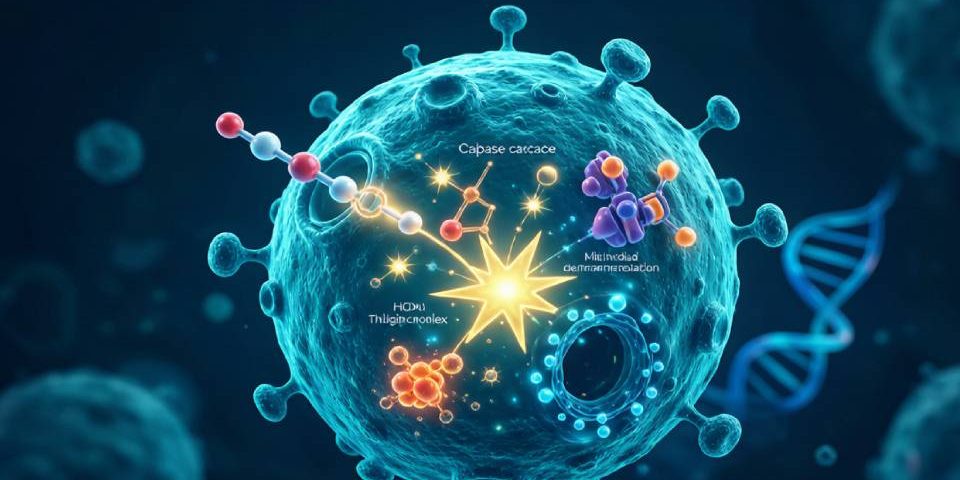
Sodium butyrate is the sodium salt of butyric acid — a four-carbon short-chain fatty acid (SCFA) generated when gut microbiota ferment dietary fiber. Long recognized as the primary energy source for colonic epithelial cells, it has emerged as a mechanistically rich candidate in colorectal cancer (CRC) research. A 2024 review by Luo Shunli and Sun Suxia in Chongqing Medicine provides the most comprehensive mechanistic map to date, identifying seven distinct pathways through which sodium butyrate induces apoptosis in CRC cells — while also summarizing its role in gut microenvironment maintenance and intestinal immune barrier reinforcement.
inhibitor
mmol/L
The Colorectal Cancer Problem — and Why Sodium Butyrate Matters
Colorectal cancer is one of the most prevalent and deadly cancers worldwide. According to GLOBOCAN 2020 data, approximately 1.93 million new cases and 940,000 deaths occurred globally in a single year — ranking it third in incidence and second in cancer mortality. In China alone, 550,000 new CRC cases were diagnosed in 2020, with around 290,000 deaths. Despite advances in surgery, radiotherapy, and chemotherapy, treatment outcomes remain suboptimal, and the molecular mechanisms underlying CRC development are not yet fully understood.
Into this landscape comes sodium butyrate — a natural metabolite produced when gut bacteria (primarily Firmicutes species) ferment dietary fiber. Unlike synthetic HDAC inhibitors that require pharmaceutical development pathways, sodium butyrate is a naturally occurring compound with an established dietary safety profile. It reaches colonic epithelial cells at millimolar concentrations in healthy individuals consuming fiber-rich diets, positioning it at the intersection of nutrition and oncology.
Cell apoptosis — the regulated, programmed form of cell death — is the primary target. Two classical pathways govern apoptotic signaling: the extrinsic (death receptor) pathway, initiated by Fas ligand binding and downstream activation of caspase-8, caspase-6, and caspase-3; and the intrinsic (mitochondrial) pathway, regulated by cytokine release and Bcl-2 family proteins. Sodium butyrate engages both, plus five additional upstream regulatory routes.
Review scope: Luo and Sun’s 2024 paper synthesizes findings across in vitro cell studies (HCT116, SW480, LoVo, and other CRC cell lines), in vivo animal models, and clinical data to construct a comprehensive mechanistic framework. The review covers 7 apoptotic mechanisms plus sodium butyrate’s broader gut homeostatic functions — providing a unified reference for researchers evaluating it as an anti-CRC therapeutic candidate.
Seven Mechanisms by Which Sodium Butyrate Induces CRC Cell Apoptosis
Mechanism 1: HDAC Inhibition — Restoring the Epigenetic Balance
Tumor cells characteristically overexpress histone deacetylases (HDACs), maintaining histones in a hypoacetylated state that silences tumor suppressor genes. Sodium butyrate acts as an HDAC inhibitor (HDACi), restoring histone acetylation levels in cancer cells and re-expressing genes that control cell cycle arrest, apoptosis, and autophagy.
The downstream effect involves the Bcl-2 protein family — the master regulators of apoptosis. Pro-apoptotic members (BAX, BAK, BOK, BIM, BID) counteract anti-apoptotic members (Bcl-2, Bcl-XL, Bcl-B, Mcl-1L). Research shows sodium butyrate directly upregulates BAX and BAK protein expression while downregulating Bcl-XL and Mcl-1L — tipping the balance toward apoptosis in CRC cells. This positions sodium butyrate as a natural HDACi capable of inducing apoptosis via the extrinsic pathway.
Mechanism 2: Caspase Cascade Activation
Caspases are cysteine proteases residing in the cytosol, playing central roles in apoptotic execution. Once caspase-3 (the key effector caspase) is activated, cell death becomes irreversible. A key study by Tailor et al. (2014) using Z-VAD-FMK (a pan-caspase inhibitor) in SW480 and HCT116 cells demonstrated that sodium butyrate treatment significantly elevated caspase-3 levels, while caspase inhibition produced irreversible suppression of the caspase cascade and blocked mitochondrial apoptosis.
This confirms that sodium butyrate-mediated CRC apoptosis involves the intrinsic mitochondrial pathway, with caspase-3 serving as the downstream executor. The interaction between sodium butyrate-driven HDAC inhibition and caspase cascade activation represents one of the most well-validated mechanisms in this field.
Mechanism 3: Wnt Signaling Modulation
The Wnt signaling network is a complex protein cascade intimately connected with cancer cell proliferation, apoptosis, autophagy, inflammation, immune evasion, epithelial-mesenchymal transition (EMT), invasion, and metastasis. Research by Bordonaro (2023) compared early colon microadenoma cells (LT97) with metastatic CRC cells (SW620) to assess gene expression patterns influencing patient prognosis.
The study found that oncogenic Wnt signaling gene expression patterns — present in LT97 cells — correlated with better prognosis and higher sensitivity to butyrate-mediated inhibition of proliferation. LT97 cells showed greater sensitivity to butyrate’s anti-proliferative effects than SW620 cells, potentially because oncogenic Wnt signaling is over-activated by butyrate in these early-stage cells, leading to growth suppression. This suggests sodium butyrate’s efficacy may vary by CRC disease stage and Wnt pathway activation status.
Mechanism 4: JAK2/STAT3 Pathway Blockade
The JAK2/STAT3 signaling axis is a critical intracellular signal transduction backbone — triggered by cytokines and interferons, rapidly converting extracellular signals to nuclear gene expression changes. It is aberrantly activated in lung, esophageal, gastric, liver, and breast cancers. In CRC specifically, IL-6 can activate STAT3 to promote tumor cell proliferation, and JAK/STAT activation in radiation-resistant CRC tissue correlates with metastasis and poor prognosis.
Yuan et al. (2020) demonstrated that sodium butyrate, both in vitro and in vivo, reduces gp130 receptor expression (the IL-6 co-receptor) and blocks IL-6/JAK2/STAT3 pathway activation — thereby inhibiting tumor proliferation, colony formation, and migratory capacity while promoting apoptosis. This identifies IL-6 and its receptor gp130 as potential therapeutic targets in CRC, with sodium butyrate as a natural pathway blocker.
Mechanism 5: miRNA Expression Regulation
MicroRNAs (miRNAs) are small non-coding RNA molecules that regulate cell cycle arrest, apoptosis, proliferation, and differentiation by modulating the expression of oncogenes or tumor suppressor genes. Aberrant miRNA overexpression in CRC is well documented. Ali et al. (2022) employed high-throughput functional screening to identify miRNAs that could enhance sodium butyrate’s anti-cancer properties, confirming that miR-125b, miR-181a, miR-593, and miR-1227 promote apoptosis and inhibit proliferation under sodium butyrate treatment.
Pathway analysis of these miRNA targets revealed involvement in key cancer-related growth pathways — Wnt and PI3K signaling — along with cancer-associated miRNA targets including TRIM29, COX2, PIK3R3, CCND1, MET, EEF2K, DVL3, and NUP62. The cooperative regulation between miRNA homologs and sodium butyrate amplifies its anti-cancer properties. Additional research identified that miR-17-92a, miR-18b-106a, and miR-25-106b clusters suppress HCT-116 cell proliferation, further underscoring the miRNA-sodium butyrate synergy.
Mechanism 6: ROS-Mediated Apoptosis Induction
Reactive oxygen species (ROS) play a dual role in cellular physiology — serving normal signaling functions at physiological levels but driving apoptosis and autophagy when generated in abnormal or excessive quantities. Survivin, a small molecular weight anti-apoptotic protein, is overexpressed in CRC cells and promotes tumor cell survival by suppressing apoptosis.
Tailor et al. demonstrated that physiological concentrations of sodium butyrate (1–5 mmol/L) applied to HCT116 and SW480 cells over 12–24 hours significantly reduced CRC cell viability, induced G2/M phase cell cycle arrest, decreased Survivin and Bcl-2 expression, and increased ROS production. Additional research found that sodium butyrate upregulates mitochondrial calcium uniporter expression, elevating ROS levels and thereby suppressing proliferation while promoting autophagy and apoptosis in CRC cells.
Mechanism 7: Endoplasmic Reticulum (ER) Stress Modulation
The endoplasmic reticulum is exquisitely sensitive to environmental disruptions — glucose deprivation, hypoxia, oxidative stress, and infection can all trigger ER dysfunction, leading to accumulation of misfolded or unfolded proteins and initiating the unfolded protein response (UPR), commonly termed ER stress. While autophagy activated by ER stress can serve as a self-protective mechanism, Zhang et al. (2016) demonstrated that sodium butyrate-induced autophagy can be mediated by ER stress.
Crucially, blocking the ER stress response pathway — rather than activating it — suppresses CRC cell autophagy, enhances apoptosis, and inhibits CRC cell proliferation. This creates a therapeutic paradox: blocking the cell’s adaptive ER stress response amplifies sodium butyrate’s pro-apoptotic effects. The authors suggest that targeting adaptive ER stress pathways, or promoting apoptotic ER stress pathways, may be a viable CRC treatment strategy in combination with sodium butyrate.
Mechanism Summary: Sodium Butyrate’s Anti-CRC Apoptosis Map
| # | Mechanism | Key Targets / Effectors | Pathway Type | Key Evidence |
|---|---|---|---|---|
| 1 | HDAC inhibition | ↑BAX, ↑BAK / ↓Bcl-XL, ↓Mcl-1L | Extrinsic (death receptor) | Multiple HDACi studies |
| 2 | Caspase cascade activation | ↑Caspase-3, mitochondrial apoptosis | Intrinsic (mitochondrial) | Tailor et al. 2014; Z-VAD-FMK model |
| 3 | Wnt signaling modulation | Oncogenic vs receptor-mediated Wnt regulation | Proliferation / apoptosis switch | Bordonaro 2023 (LT97 vs SW620) |
| 4 | JAK2/STAT3 blockade | ↓IL-6, ↓gp130, ↓STAT3 activation | Cytokine-driven proliferation inhibition | Yuan et al. 2020 |
| 5 | miRNA regulation | miR-125b, miR-181a, miR-593, miR-1227 | Post-transcriptional oncogene suppression | Ali et al. 2021, 2022 |
| 6 | ROS-mediated apoptosis | ↑ROS, ↓Survivin, G2/M cycle arrest | Oxidative apoptosis induction | Tailor et al.; Qin et al. 2022 |
| 7 | ER stress modulation | UPR inhibition → enhanced apoptosis | Organelle stress response | Zhang et al. 2016 |
Convergent Apoptosis: Sodium Butyrate’s Multi-Node Attack on CRC Cells
↑BAX/BAK, ↓Bcl-XL
↓IL-6/gp130
G2/M arrest
Three representative pathways from the 7-mechanism framework. All converge on CRC cell apoptosis induction.
Beyond Apoptosis: Sodium Butyrate’s Gut Microenvironment Roles
The anti-CRC mechanisms described above exist within a broader biological context: sodium butyrate is also a core regulator of gut homeostasis, immune barrier function, and intestinal inflammation control. These functions are mechanistically linked to CRC prevention.
Gut Microbiota Homeostasis
Dietary fiber fermentation by gut microbiota produces SCFAs (acetate, propionate, butyrate). Sodium butyrate is the primary SCFA and energy source for colonocytes. Disruption of this production is linked to CRC, IBD, and obesity.
Intestinal Epithelial Barrier
SCFAs maintain anti-inflammatory activity and epithelial barrier integrity. Sodium butyrate regulates Th1/Th17 helper cell differentiation and promotes IL-10 production, preserving gut immune homeostasis.
Anti-Inflammatory Activity
Oral sodium butyrate suppresses neutrophil-associated immune responses and neutrophil extracellular trap (NET) formation, significantly improving mucosal inflammation in DSS-induced colitis mouse models (Li et al., 2021).
CD4⁺ T Cell Regulation
Sodium butyrate directly reduces lamina propria CD4⁺ T cell function through HDAC inhibition and GPR43 signaling (Kibbe et al., 2021), protecting the intestinal mucosa from excessive inflammatory damage.
Clinical relevance: Patients with inflammatory bowel disease (IBD) face significantly elevated CRC risk. Sodium butyrate’s dual function — reducing intestinal inflammation while directly inducing CRC cell apoptosis — positions it as a compound with both preventive and therapeutic relevance across the IBD-to-CRC continuum.
Sodium Butyrate in the HDAC Inhibitor Landscape
HDAC inhibitors (HDACis) have gained significant traction as cancer therapeutics. Vorinostat (SAHA) has already been approved by the FDA for T-cell lymphoma and breast cancer treatment. Others — entinostat and trichostatin A (TSA) — are in active research and clinical trials.
Sodium butyrate occupies a distinctive position in this landscape: it is a naturally occurring, dietary-origin HDACi — a metabolite of normal gut microbiota activity. This natural origin, combined with established dietary safety and the millimolar concentrations achievable in the colon through fiber-rich diets or supplementation, gives it a fundamentally different risk-benefit profile compared to synthetic HDACis developed as pharmaceuticals.
The review authors note that while most mechanistic evidence comes from cell and animal studies, and clinical trials in humans remain limited, the convergence of evidence from 7 distinct apoptotic pathways provides a compelling scientific foundation for sodium butyrate’s development as a first-line or adjuvant anti-CRC compound.
B2B Application Areas for Sodium Butyrate
The mechanistic profile reviewed here — HDAC inhibition, anti-inflammatory activity, gut barrier reinforcement, and multi-pathway apoptosis induction — supports a range of formulation applications for food-grade sodium butyrate in B2B settings.
Gut Health Supplements
Capsule or enteric-coated formats targeting microbiome support, colonocyte energy, and IBD management. Growing consumer demand for postbiotic-based gut health products.
Functional Foods & Nutraceuticals
Incorporation into fiber-enriched functional foods designed to support colon health. Particularly relevant for high-fiber dietary formulations targeting gut-oncology overlap.
Oncology Research & Pharma
High-purity sodium butyrate as a research-grade compound for in vitro CRC studies, HDAC inhibition assays, and combination therapy pre-clinical development.
Postbiotic Formulations
Inclusion in microbiome-targeted formulations as a defined postbiotic SCFA. Supports regulatory filings where a characterized gut metabolite is preferred over live microorganism inputs.
Veterinary & Animal Nutrition
Sodium butyrate is widely used in animal feed for gut health and immune support in poultry, swine, and aquaculture — a large and growing adjacent market.
Cell Biology & Epigenetics Tools
Sodium butyrate is a standard research tool for epigenetic studies — used to experimentally induce HDAC inhibition, differentiation, and gene expression studies across multiple cell types.
Frequently Asked Questions
What is sodium butyrate and where does it come from naturally?
Sodium butyrate is the sodium salt of butyric acid — a four-carbon short-chain fatty acid (SCFA). It is naturally produced in the human colon when gut bacteria (primarily Firmicutes, Clostridia, and Roseburia species) ferment dietary fiber such as resistant starch, pectin, and inulin. In healthy individuals consuming adequate dietary fiber, colonic butyrate concentrations reach approximately 1–5 mmol/L — the same physiological range studied in CRC cell apoptosis research.
How does sodium butyrate differ from other HDAC inhibitors used in cancer research?
Synthetic HDACis like vorinostat (SAHA) and entinostat are designed as pharmaceutical compounds with specific potency and pharmacokinetic profiles. Sodium butyrate is a naturally occurring, dietary-origin HDACi with a much longer history of human exposure through food and gut metabolism. It has a generally recognized safe (GRAS) status in food applications and reaches relevant colonic concentrations through dietary fiber intake — making it particularly relevant for CRC prevention and adjuvant applications rather than acute therapeutic use alone.
Which colorectal cancer cell lines have been studied with sodium butyrate?
The most frequently used CRC cell lines in sodium butyrate research include HCT116 (microsatellite instable CRC), SW480 (primary colon adenocarcinoma), SW620 (metastatic CRC derived from SW480), LT97 (early colon microadenoma), and LoVo (Duke’s C adenocarcinoma). Each line represents different stages and molecular subtypes of CRC, allowing researchers to assess sodium butyrate’s effects across the disease spectrum. Results from HCT116 and SW480 models are the most cited in the apoptosis mechanisms literature.
Is the evidence for sodium butyrate in CRC primarily from cell studies or clinical trials?
As of the 2024 review, the mechanistic evidence is predominantly from in vitro (cell culture) and in vivo (animal model) experiments. Multiple independent research groups have validated each of the 7 apoptosis mechanisms across different CRC cell lines and animal models. Clinical trials in human CRC patients remain limited — which the review authors explicitly identify as a gap. Extrapolating cell and animal study results to human outcomes requires appropriate caution, and further clinical investigation is warranted.
What role does the gut microbiome play in sodium butyrate production and CRC risk?
The gut microbiome is the primary source of endogenous sodium butyrate through dietary fiber fermentation. Dysbiosis — disruption of normal microbial composition — reduces butyrate-producing bacterial populations, lowering colonic SCFA levels and compromising the epithelial barrier. This creates conditions permissive for inflammation and tumor initiation. Epidemiological studies link fiber-poor diets (which reduce microbial butyrate production) to elevated CRC risk, while high-fiber diets that sustain butyrate-producing microbiota are consistently associated with reduced CRC incidence.
How does sodium butyrate interact with IBD and CRC risk?
IBD (including Crohn’s disease and ulcerative colitis) significantly elevates CRC risk — IBD patients develop CRC at higher rates than the general population. Sodium butyrate addresses both conditions through overlapping mechanisms: it suppresses colonic inflammation via HDAC/GPR43 signaling and neutrophil regulation, and directly induces apoptosis in transformed colonocytes. This dual activity makes it particularly relevant in the IBD-to-CRC progression model, where chronic inflammation serves as the driver of malignant transformation.
Source Food-Grade Sodium Butyrate from TongyuBio
TongyuBio supplies food-grade sodium butyrate with documented purity, GMP-certified processing, and full technical specifications — suitable for dietary supplement formulation, functional food applications, nutraceutical development, and research use. Worldwide B2B shipping. Contact us for sample, CoA, and specification sheet.
Request Sample & CoA →Luo Shunli, Sun Suxia. Research Progress on the Action Mechanism of Sodium Butyrate in Apoptosis of Colorectal Cancer Cells [丁酸钠在结直肠癌细胞凋亡中的作用机制研究进展]. Chongqing Medicine (重庆医学). 2024, 53(16): 2530–2535. DOI: 10.3969/j.issn.1671-8348.2024.16.025. Affiliations: School of Public Health & Laboratory Medicine, Hunan University of Medicine; Dept. of Nutrition and Food Hygiene, School of Public Health, Southern Medical University.
Selected Supporting References[1] Sung GH, et al. Global cancer statistics 2020: GLOBOCAN estimates. CA Cancer J Clin. 2021;71(3):209–249.
[2] Wang W, et al. Mortality and years of life lost of colorectal cancer in China, 2005–2020. Chin Med J. 2021;134(16):1933–1940.
[3] Tailor D, et al. Sodium butyrate induces DRP1-mediated mitochondrial fusion and apoptosis in human colorectal cancer cells. Mitochondrion. 2014;16:55–64.
[4] Yuan Y, et al. The fiber metabolite butyrate reduces gp130 by targeting TRAF5 in colorectal cancer cells. Cancer Cell Int. 2020;20:212.
[5] Ali SR, et al. Functional high-throughput screen identifies microRNAs that promote butyrate-induced death in colorectal cancer cells. Mol Ther Nucleic Acids. 2022;30:30–47.
[6] Bordonaro M. Oncogenic and receptor-mediated Wnt signaling influence the sensitivity of colonic cells to butyrate. J Cancer. 2023;14(3):446–453.
[7] Huang B, et al. The role of IL-6/JAK2/STAT3 signaling pathway in cancers. Front Oncol. 2022;12:1023177.
[8] Zhang J, et al. Sodium butyrate induces endoplasmic reticulum stress and autophagy in colorectal cells: implications for apoptosis. PLoS One. 2016;11(1):e147218.
[9] Kibbe JJ, et al. Butyrate directly decreases human gut lamina propria CD4⁺ T cell function through HDAC inhibition and GPR43 signaling. Immunobiology. 2021;226(5):152126.
[10] Li G, et al. Microbiota metabolite butyrate constrains neutrophil functions and ameliorates mucosal inflammation in inflammatory bowel disease. Gut Microbes. 2021;13(1):1968257.
[11] Wawruszak A, et al. Vorinostat (SAHA) and breast cancer: an overview. Cancers. 2021;13(18):4700.
[12] Martin-Gallausiaux C, et al. SCFA: mechanisms and functional importance in the gut. Proc Nutr Soc. 2021;80(1):37–49.
[13] Chen L, et al. Microbiota metabolite butyrate differentially regulates Th1 and Th17 cells’ differentiation and function in induction of colitis. Inflamm Bowel Dis. 2019;25(9):1450–1461.
[14] Qin Y, et al. Effect and mechanism of mitochondrial calcium uniporter on sodium butyrate against colorectal cancer. Chin J Cancer Prev Treat. 2022;29(20):1467–1474.
[15] Shah SC, Itzkowitz SH. Colorectal cancer in inflammatory bowel disease: mechanisms and management. Gastroenterology. 2022;162(3):715–730.
[16] Flores-Romero H, et al. Bcl-2-family protein tBID can act as a BAX-like effector of apoptosis. EMBO J. 2022;41(2):e108690.
