

Oxidation Stability & Shelf Life Prediction for Eucommia Seed Oil: A Kinetics Model Approach
June 20, 2026
Goji Seed Oil GC-MS Analysis: 22 Fatty Acids, 11+ Volatile Compounds & Their Bioactivities
June 21, 2026
You are not deficient in melatonin — you are deficient in the internal environment required for tryptophan to reach serotonin. Only ~5% of dietary tryptophan travels the serotonin → melatonin path. The remaining 95% is intercepted by inflammation-activated IDO and TDO enzymes and shunted into the kynurenine pathway, where it produces neurotoxic metabolites instead of sleep-regulating neurotransmitters. Tributyrin — a triglyceride that delivers butyrate across the blood-brain barrier — can change this equation. By inhibiting HDAC and silencing the pro-inflammatory genes that drive IDO/TDO overactivation, tributyrin restores tryptophan to its rightful path. This article traces the full gut-brain-sleep mechanism, step by step.
The Cruel Fact: 95% of Your Tryptophan Never Reaches Serotonin
Ask anyone about sleep aids and melatonin is the first answer. Those with a bit more biochemistry knowledge trace it back to its precursor — serotonin (5-HT, 5-hydroxytryptamine), the neurotransmitter governing mood, appetite, and the sleep-wake cycle. Go one step further upstream and you land on tryptophan, an essential amino acid you can only obtain from food.
This sketches a deceptively simple chain: eat protein → get tryptophan → synthesize serotonin → convert to melatonin → sleep well.
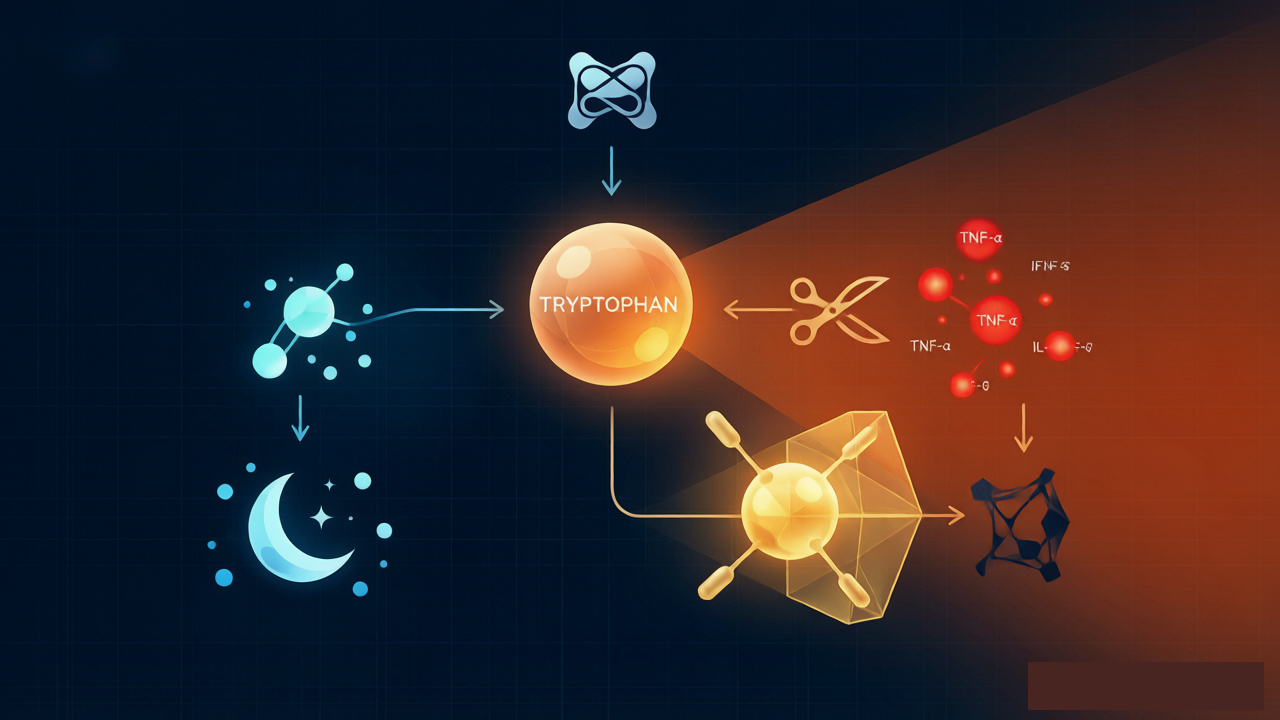
Reality is far messier. Only about 5% of dietary tryptophan actually travels the serotonin → melatonin path. The remaining 95% is intercepted in the liver and kidneys by a set of enzymes collectively called the kynurenine pathway. Why does the body sacrifice such a large share? Because the kynurenine pathway’s end product is nicotinamide adenine dinucleotide (NAD⁺) — an essential coenzyme for cellular energy metabolism. Evolutionarily, energy production trumps sleep regulation. Survival first, sleep second.
The problem begins when the kynurenine pathway goes into overdrive. Its intermediate metabolite, quinolinic acid, is an NMDA receptor agonist. At elevated concentrations, it exerts excitotoxic effects on neurons and is tightly linked to neurodegenerative disorders, anxiety, and depression. In plain terms: your tryptophan has been hijacked — by inflammation — to produce neurotoxic molecules, leaving precious little raw material for serotonin and melatonin.
Who Are the Hijackers? Inflammation’s Grip on Tryptophan Metabolism
Three enzymes act as the critical “switches” at the tryptophan metabolic fork:
| Enzyme | Full Name | Function | Activation Triggers |
|---|---|---|---|
| IDO1 | Indoleamine-2,3-Dioxygenase 1 | Converts Trp → Kynurenine | IFN-γ, TNF-α (pro-inflammatory cytokines) |
| IDO2 | Indoleamine-2,3-Dioxygenase 2 | Same as IDO1, lower basal activity | Sustained chronic inflammation |
| TDO | Tryptophan-2,3-Dioxygenase | Primary hepatic Trp → KYN enzyme | Cortisol (stress hormone), glucocorticoids |
When your body harbors chronic low-grade inflammation or endures sustained psychological / physiological stress, pro-inflammatory cytokines (TNF-α, IL-6, IFN-γ) and stress hormones (cortisol) spike. They attack on three fronts simultaneously:
- Activate IDO1/IDO2 → accelerate tryptophan degradation into the kynurenine pathway
- Activate TDO → ramp up hepatic tryptophan consumption
- Activate KMO (kynurenine-3-monooxygenase) → push kynurenine further toward the neurotoxic quinolinic acid branch
Double penalty: serotonin-melatonin precursors are being drained while neurotoxic metabolites accumulate. This explains why many chronic insomniacs simultaneously struggle with anxiety and low mood — they share the same tryptophan metabolism hijacked by inflammation.
Tributyrin Enters the Picture: A Metabolic Strategy That Attacks Upstream
If the root problem is inflammation-driven IDO/TDO overactivation, then suppressing inflammation is the key to returning tryptophan to the serotonin path. Enter tributyrin.
Tributyrin (TB) is a triglyceride with three butyrate (C4 short-chain fatty acid) molecules esterified to a glycerol backbone. Once ingested, pancreatic lipases in the small intestine hydrolyze tributyrin, releasing free butyrate — the molecule that does the actual work. Butyrate’s benefits to gut health have been extensively documented: it is the preferred fuel source for colonocytes, maintains intestinal barrier integrity, and modulates the gut microbiota.
But butyrate’s reach extends far beyond the gut. Butyrate crosses the blood-brain barrier (BBB) via monocarboxylate transporters (MCTs), which are abundantly expressed on brain endothelial cells. Once inside the central nervous system, butyrate operates through a key epigenetic mechanism:
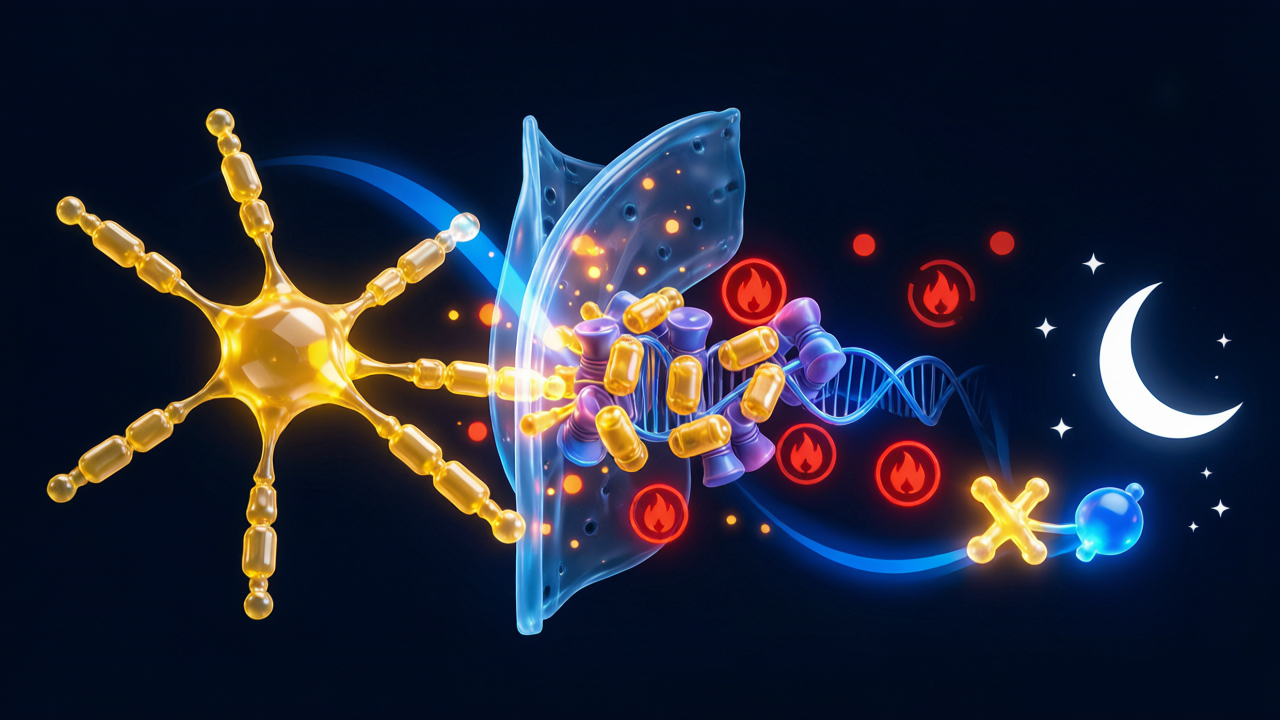
Histone Deacetylase (HDAC) Inhibition — butyrate suppresses HDAC enzymes in microglia and astrocytes, keeping histone proteins acetylated and shutting down pro-inflammatory gene transcription. This is the molecular switch that silences the inflammatory signals driving IDO/TDO overactivation.
The HDAC Mechanism, Explained
DNA does not float naked inside the nucleus — it is wound around histone proteins. The acetylation state of these histones determines which genes are accessible for transcription. If histones at the promoter regions of pro-inflammatory genes are highly acetylated, those genes are “open for business” and the cell churns out inflammatory cytokines. HDAC (histone deacetylase) enzymes remove acetyl groups from histones — they are supposed to keep inflammation in check. Under chronic inflammation, HDAC function is often dysregulated.
Butyrate happens to be a natural HDAC inhibitor. By inhibiting HDAC enzymes, butyrate helps maintain histone acetylation where it matters, effectively silencing overactive inflammatory genes. The downstream effects include:
- ↓ TNF-α — tumor necrosis factor-alpha, the master pro-inflammatory cytokine
- ↓ IL-6 — interleukin-6, directly linked to sleep fragmentation
- ↓ IL-1β — interleukin-1-beta, involved in neuroinflammation
- ↓ IFN-γ — interferon-gamma, the strongest known IDO1 inducer
This is the critical junction: by reducing IFN-γ, butyrate directly dials down IDO1 activation — the primary “hijacker” of tryptophan. Lower IDO/TDO activity means less tryptophan is diverted into the kynurenine pathway and more remains available for serotonin synthesis.
The Complete Cascade: From Tributyrin to Restful Sleep
(Oral)
Hydrolysis
into Circulation
(via MCTs)
in Microglia
↓ IL-6
↓ IDO1 Activity
Pathway Restored
Melatonin Synthesis
Deeper Sleep
This mechanism explains a phenomenon observed clinically: individuals who respond poorly to long-term melatonin supplementation often experience dramatic sleep improvement once their systemic inflammation is brought under control. They were never deficient in melatonin — they were deficient in the internal environment required for tryptophan to complete its journey to serotonin and melatonin.
Tributyrin vs. Butyrate Salts: Why the Delivery Vehicle Matters
If butyrate is the active molecule, why not simply supplement with sodium butyrate or calcium butyrate? The answer lies in pharmacokinetics — how the butyrate is released, where it is absorbed, and whether it reaches the brain.
| Dimension | Sodium / Calcium Butyrate | Tributyrin |
|---|---|---|
| Odor | Strong rancid, foul smell — unacceptable in oral formulations | Nearly odorless — suitable for capsules, powders, and functional foods |
| Absorption Site | Rapid release in stomach / duodenum; minimal colonic delivery | Gradual lipase-mediated hydrolysis in small intestine; sustained butyrate release across the entire intestinal tract |
| Bioavailability | Low (~30% reaches colon) | High — triglyceride sustained-release effect delivers 2–3× more butyrate to target tissues |
| Dosing Window | Narrow; higher doses irritate the GI tract | Wide; glycerol backbone provides buffered, gradual release |
| BBB Penetration | Indirect, dependent on systemic circulation spikes | More efficient — sustained release maintains stable plasma concentration for BBB transport via MCTs |
Tributyrin is essentially a butyrate sustained-release system. Its triglyceride structure confers higher lipophilicity, enabling more efficient passage through cell membranes and the blood-brain barrier. The release kinetics more closely mimic physiological conditions — the way your gut microbiota would naturally produce butyrate from fermentable fiber.
Two Scenarios: Inflammation ON vs. Inflammation OFF
🛌 With Tributyrin (Inflammation OFF)
- Butyrate crosses BBB, inhibits HDAC
- Pro-inflammatory genes silenced in microglia
- TNF-α ↓ · IL-6 ↓ · IFN-γ ↓
- IDO1 and TDO activity suppressed
- More tryptophan available for 5-HT synthesis
- Pineal gland efficiently produces melatonin
- Faster sleep onset, sustained deep sleep
- Restored circadian rhythm
😣 Without Tributyrin (Inflammation ON)
- Chronic inflammation drives HDAC dysregulation
- Pro-inflammatory genes remain active
- TNF-α ↑ · IL-6 ↑ · IFN-γ ↑
- IDO1 and TDO remain highly activated
- 95% of tryptophan diverted to kynurenine path
- Serotonin and melatonin precursors depleted
- Sleep onset delayed, sleep fragmentation
- Neurotoxic quinolinic acid accumulates
Who Stands to Benefit Most?
Based on the mechanism outlined above, the following populations experiencing sleep disruption may respond more favorably to a tributyrin-based approach than to melatonin supplementation alone:
Chronic Low-Grade Inflammation
Gut sensitivities, food intolerances, recurrent skin reactions, unexplained fatigue — all signs of systemic inflammation that upregulates IDO/TDO and drains tryptophan from the serotonin pool.
High Chronic Stress
Elevated cortisol simultaneously activates TDO (hepatic tryptophan drain) and suppresses serotonin synthesis — a double hit that exogenous melatonin alone cannot fix.
Gut Dysbiosis
Insufficient short-chain fatty acid production, especially butyrate, compromises the gut barrier. Endotoxin translocation fuels systemic inflammation, perpetuating the tryptophan hijack.
Melatonin Tolerance
When exogenous melatonin stops working, the bottleneck is likely upstream — insufficient serotonin substrate rather than melatonin receptor desensitization.
Sleep-Onset Insomnia
Difficulty falling asleep points to poor pineal melatonin synthesis efficiency — a problem of serotonin supply, not melatonin receptor responsiveness.
Formulation & Sourcing Implications
The gut-brain-sleep axis revealed by tributyrin’s mechanism opens several product development opportunities for nutraceutical and functional food formulators. The key is understanding that tributyrin does not compete with melatonin — it addresses an entirely different, upstream bottleneck.
Sleep Support Formulations
Pair tributyrin as an upstream tryptophan-pathway restorer with downstream melatonin or magnesium for a complementary, multi-target sleep product grounded in mechanism.
Mood & Cognitive Health
By reducing neuroinflammation and restoring serotonin availability, tributyrin-based formulations can target the mood-sleep intersection — addressing both anxiety-driven insomnia and cognitive fog.
Gut-Brain Axis Products
Tributyrin is a bridge molecule — acting in the gut (colonocyte fuel, barrier integrity) and the brain (HDAC inhibition, neuroinflammation suppression) simultaneously. Ideal for gut-brain axis product lines.
Custom SCFA Blends
Combine tributyrin with other short-chain fatty acid precursors (acetate, propionate) for comprehensive gut-brain-metabolic formulations. TongyuBio offers multiple SCFA ingredient forms.
Functional Foods & Beverages
Tributyrin’s near-odorless profile and triglyceride form make it viable for food-matrix integration — unlike butyrate salts, which carry a strong rancid odor unacceptable in finished products.
Regulatory & Claims Support
Tributyrin is a naturally occurring triglyceride found in butter and breast milk. The butyrate it releases is a physiological SCFA produced daily by the gut microbiota. Well-established safety profile supports structure-function claims.
Explore Tributyrin & SCFA Ingredients for Your Formulation
Interested in formulating with tributyrin or other short-chain fatty acid ingredients for sleep, gut health, mood, or gut-brain axis applications? TongyuBio supplies research-backed, high-purity SCFA ingredients with full analytical documentation and flexible bulk packaging options.
Frequently Asked Questions
How is tributyrin different from taking melatonin directly?
Melatonin supplements provide the end product. Tributyrin addresses the upstream bottleneck — it suppresses the inflammation that diverts tryptophan away from serotonin and melatonin synthesis. If your problem is insufficient tryptophan reaching the serotonin path rather than poor melatonin receptor sensitivity, tributyrin targets the root cause while melatonin only patches the symptom. The two approaches are complementary rather than competitive.
Why does inflammation affect tryptophan metabolism?
Pro-inflammatory cytokines (especially IFN-γ) are the strongest known inducers of IDO1, the enzyme that shunts tryptophan into the kynurenine pathway. This is an evolutionarily conserved immune defense mechanism — depleting local tryptophan starves pathogens and rapidly proliferating cells. The unintended consequence is that serotonin and melatonin synthesis suffer collateral damage, particularly during chronic, sustained inflammation.
Does butyrate actually cross the blood-brain barrier?
Yes. Butyrate is transported across the BBB via monocarboxylate transporters (MCTs), which are abundantly expressed on brain endothelial cells. Once in the CNS, butyrate exerts HDAC inhibitory effects on microglia and astrocytes, suppressing neuroinflammation. Multiple studies have confirmed butyrate’s brain bioavailability through both oral administration and direct measurement in cerebrospinal fluid (CSF).
What is the connection between the gut microbiota and this pathway?
Gut bacteria ferment dietary fiber to produce short-chain fatty acids — including butyrate — as their primary metabolic output. A healthy microbiota continuously supplies endogenous butyrate. When dysbiosis occurs, butyrate production drops, gut barrier integrity weakens, and bacterial endotoxins (like LPS) leak into circulation, triggering systemic inflammation. This creates a vicious cycle: less butyrate → more inflammation → more IDO/TDO activation → less serotonin → poorer sleep. Tributyrin supplementation can help restore butyrate levels independently of microbiota status.
Is tributyrin safe for long-term use?
Tributyrin is a naturally occurring triglyceride found in butter and breast milk. The butyrate it releases is a physiological molecule that your own gut microbiota produces daily from dietary fiber. Safety studies have shown tributyrin to be well-tolerated across extended administration periods, with a wider therapeutic window than butyrate salts due to its sustained-release kinetics. As with any dietary supplement, consult a healthcare professional before starting.
How long does it take to notice sleep improvements with tributyrin?
Unlike melatonin (which acts within 30–60 minutes), tributyrin does not directly induce sleep. It works by gradually reducing systemic inflammation and restoring the tryptophan → serotonin → melatonin pathway over time. Improvements may become noticeable after 1–3 weeks of consistent use, with progressive benefits as inflammatory markers decline and neurotransmitter synthesis normalizes. Individual results vary based on baseline inflammation levels, gut health status, and the degree of IDO/TDO overactivation.
Conclusion
Sleep dysfunction is never a single-link failure. Reducing “insomnia” to “not enough melatonin” is an oversimplification that ignores the underlying biochemistry. Where your tryptophan goes — whether it gets routed toward the molecules that bring restful sleep or gets hijacked by inflammation to produce neurotoxic metabolites — depends on your body’s inflammatory state and butyrate availability.
Tributyrin offers a unique intervention point: rather than acting directly on sleep-regulating nuclei, it cuts off inflammation at the source, upstream, allowing tryptophan to return to its normal serotonin-melatonin path. Sleep is a barometer of systemic inflammation. When you wake up still feeling exhausted, the question worth asking isn’t whether you took melatonin last night — it’s whether your gut has enough butyrate to keep the tryptophan hijackers at bay.
Badawy AA. Kynurenine Pathway of Tryptophan Metabolism: Regulatory and Functional Aspects. Int J Tryptophan Res. 2017;10:1178646917691938. doi:10.1177/1178646917691938
O’Mahony SM, Clarke G, Borre YE, et al. Serotonin, tryptophan metabolism and the brain-gut-microbiome axis. Behav Brain Res. 2015;277:32–48. doi:10.1016/j.bbr.2014.07.027
Kennedy PJ, Cryan JF, Dinan TG, Clarke G. Kynurenine pathway metabolism and the microbiota-gut-brain axis. Neuropharmacology. 2017;112(Pt B):399–412. doi:10.1016/j.neuropharm.2016.07.002
Stilling RM, van de Wouw M, Clarke G, et al. The neuropharmacology of butyrate: The bread and butter of the microbiota-gut-brain axis? Neurochem Int. 2016;99:110–132. doi:10.1016/j.neuint.2016.06.011
Supporting ReferencesBourassa MW, Alim I, Bultman SJ, Ratan RR. Butyrate, neuroepigenetics and the gut microbiome: Can a high fiber diet improve brain health? Neurosci Lett. 2016;625:56–63.
Dalile B, Van Oudenhove L, Vervliet B, Verbeke K. The role of short-chain fatty acids in microbiota-gut-brain communication. Nat Rev Gastroenterol Hepatol. 2019;16(8):461–478.
Cervenka I, Agudelo LZ, Ruas JL. Kynurenines: Tryptophan’s metabolites in exercise, inflammation, and mental health. Science. 2017;357(6349):eaaf9794.
Miyamoto J, Kasubuchi M, Nakajima A, et al. The role of short-chain fatty acids in the interplay between diet, gut microbiota, and host energy metabolism. J Lipid Res. 2016;54(9):2325–2340.
Govindarajan N, Agis-Balboa RC, Walter J, et al. Sodium butyrate improves memory function in an Alzheimer’s disease mouse model. J Alzheimers Dis. 2011;26(1):187–197.
Silva YP, Bernardi A, Frozza RL. The Role of Short-Chain Fatty Acids from Gut Microbiota in Gut-Brain Communication. Front Endocrinol. 2020;11:25.
