

The Right Fat Ratio: How Sea Buckthorn Oil’s UFA/SFA Balance Protects Against Alcoholic Liver Disease
June 19, 2026
How Tributyrin Redirects Tryptophan Toward Melatonin: The Gut-Brain-Sleep Axis Explained
June 20, 2026Oxidation Stability & Shelf Life Prediction for Eucommia Seed Oil: A Kinetics Model Approach
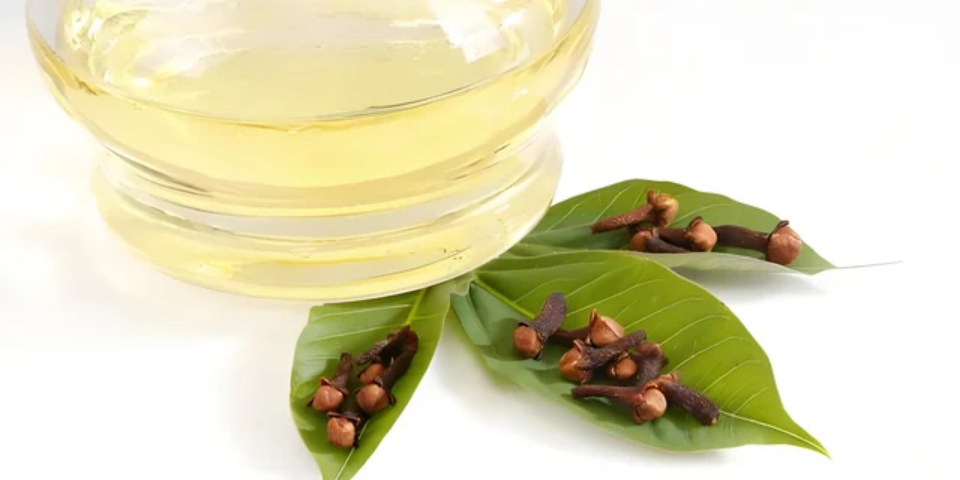
Refined Eucommia seed oil is 90% unsaturated fatty acids — highly nutritious, but notoriously prone to oxidation. A 2021 study tests five antioxidants, builds a kinetics model, and predicts exact shelf life at four temperatures. Here’s what formulators need to know.
(ALA C18:3n3)
with 0.02% TBHQ at 25°C
Tested & Ranked
at 25°C (no antioxidant)
Why Oxidation Stability Is the #1 Challenge for Eucommia Seed Oil
Eucommia seed oil (Eucommia ulmoides Oliv.) is one of the most nutritionally dense edible oils in the world. With an unsaturated fatty acid (UFA) content exceeding 89%, it rivals — and in some ways surpasses — well-known functional oils like sea buckthorn and flaxseed oil. The star compound is α-linolenic acid (ALA, C18:3n3) at over 60% of total fatty acids.
But there’s a catch. The same double bonds that make ALA and other PUFAs (polyunsaturated fatty acids) so valuable also make them vulnerable to oxidation. Once exposed to heat, light, or oxygen, the oil degrades — producing aldehydes, ketones, and other off-flavor compounds. Some oxidation products are even neurotoxic. For bulk ingredient suppliers and finished-product brands, shelf life is a make-or-break metric.
The challenge in numbers: In accelerated oxidation tests at 60°C, untreated refined Eucommia seed oil reaches the legal peroxide limit (0.25 g/100 g) in just 6.89 days. At room temperature (25°C), that number rises to 10.70 days — still far too short for commercial distribution without intervention.
The 2021 study by Wang et al. in Science and Technology of Food Industry set out to solve this problem systematically. The team refined crude Eucommia seed oil, then tested five food-grade antioxidants at multiple concentrations and temperatures, using the Schaal oven method. They also built a first-order oxidation kinetics model to predict shelf life at any temperature.
What’s Inside: Eucommia Seed Oil Fatty Acid Profile
Understanding oxidation stability starts with knowing what you are protecting. The refined Eucommia seed oil in this study had the following composition (GC analysis, area normalization):
| Fatty Acid | Content (%) | Category | Notes |
|---|---|---|---|
| Palmitic acid (C16:0) | 5.69 | SFA | Stable, saturated |
| Stearic acid (C18:0) | 2.30 | SFA | Stable, saturated |
| Oleic acid (C18:1n9c) | 15.67 | MUFA | One double bond — moderately stable |
| Linoleic acid (C18:2n6c) | 10.93 | PUFA | Two double bonds — vulnerable |
| α-Linolenic acid (C18:3n3) | 63.01 | PUFA | Three double bonds — highly oxidation-prone |
| ∑PUFA | 73.94 | — | Total polyunsaturated |
| ∑UFA | 89.61 | — | Total unsaturated |
| ∑SFA | 7.99 | — | Total saturated |
The 63% ALA content is remarkable. For comparison, flaxseed oil — the gold standard for plant-based ALA — typically contains 50–60% ALA. Eucommia seed oil is at the upper end of that range, which is exactly why oxidation stability is not optional. It is essential.
The Antioxidant Leaderboard: TBHQ Ranks #1
The study tested five antioxidants approved under China’s GB 2760-2014 food safety standard, plus carnosic acid (CA) as a natural option. Each was tested at multiple concentrations using the Schaal oven method at 60°C, with peroxide value (PV) and acid value (AV) measured every 5 days for 25 days.
Ranking by antioxidant effectiveness (PV after 25 d at 60°C, lower is better):
| Rank | Antioxidant | Abbrev. | Class | PV after 25 d (g/100g) | Best Dose in Study |
|---|---|---|---|---|---|
| 🥇 1 | Tert-butyl hydroquinone | TBHQ | Synthetic phenolic | ~0.046 (at 0.02%) | 0.02% |
| 🥈 2 | Carnosic acid | CA | Natural (rosemary-derived) | ~0.105 (at 0.05%) | 0.05% |
| 🥉 3 | L-Ascorbyl palmitate | L-AP | Synthetic (vitamin C derivative) | ~0.217 (at 0.02%) | 0.02% |
| 4 | Butyl hydroxyanisole | BHA | Synthetic phenolic | ~0.240 (at 0.02%) | 0.02% |
| 5 | Vitamin E | VE | Natural (tocopherols) | ~0.270 (at 0.01%) | 0.01% |
| — | Blank (no antioxidant) | — | — | 0.388 | — |
Key takeaway: TBHQ is the most effective at suppressing peroxide formation — the primary marker of early-stage oxidation. Carnosic acid (CA) is the best natural alternative, retaining about 70% of TBHQ’s effectiveness. Notably, vitamin E showed a biphasic effect: at low doses it helps, but at higher doses it can actually promote oxidation — a known phenomenon with tocopherols in high-PUFA oils.
Optimal Dosage: More Is Not Always Better
The study carefully mapped the dose-response curve for each antioxidant. The goal: find the minimum effective dose that complies with food safety regulations while maximizing stability.
| Antioxidant | Doses Tested | Optimal Dose | Why This Dose? |
|---|---|---|---|
| Carnosic acid (CA) | 0.01%, 0.03%, 0.05%, 0.07% | 0.05% | PV and AV kept decreasing up to 0.05%; marginal gains beyond |
| TBHQ | 0.005%, 0.010%, 0.015%, 0.020% | 0.02% | Maximum legal limit under GB 2760; best PV/AV at this dose |
| Vitamin E (VE) | 0.005%, 0.010%, 0.015%, 0.020% | 0.01% | Higher doses increased PV — pro-oxidant effect observed |
| BHA | 0.005%, 0.010%, 0.015%, 0.020% | 0.02% | Note: BHA shows time-limited efficacy; re-evaluate in long-term storage |
| L-Ascorbyl palmitate (L-AP) | 0.005%, 0.010%, 0.015%, 0.020% | 0.02% | Linear improvement up to 0.02%; safe and effective |
Formulation tip: If you need a clean-label, natural-ingredient story, carnosic acid (rosemary extract) at 0.05% is the best natural option. If maximum shelf life is the priority and synthetic antioxidants are acceptable, TBHQ at 0.02% is the clear winner.
Temperature Accelerates Everything: Shelf Life at 25–60°C
The study measured PV, AV, and fatty acid composition at 40°C, 50°C, and 60°C over 25 days. The pattern is unambiguous: every 10°C increase dramatically accelerates oxidation. For bulk storage and logistics planning, this is critical data.
| Condition | Predicted Shelf Life (days to reach PV = 0.25 g/100g) | |||
|---|---|---|---|---|
| 25°C | 40°C | 50°C | 60°C | |
| No antioxidant (blank) | 10.70 | 8.76 | 7.74 | 6.89 |
| + 0.05% Carnosic acid (CA) | — | 9.76 | 8.58 | 7.59 |
| + 0.02% TBHQ | 41.41 | 19.71 | 12.48 | 8.13 |
| + 0.01% Vitamin E | — | 9.10 | 7.82 | 6.79 |
| + 0.02% BHA | — | 8.73 | 7.49 | 6.48 |
| + 0.02% L-AP | — | 11.50 | 8.48 | 6.38 |
The TBHQ effect is dramatic: at 25°C, 0.02% TBHQ extends predicted shelf life from 10.70 to 41.41 days — a 4.1× improvement. Even at 60°C, TBHQ still adds about 1.2 extra days, which in accelerated testing translates to meaningful real-world shelf-life gains.
The study also tracked how fatty acid composition shifts during storage. After 25 days at 60°C, α-linolenic acid dropped from 63.01% to 52.66% in the untreated sample — an 16.4% loss of the oil’s most valuable component. With TBHQ, the loss was only about 4.5%.
The Science: First-Order Oxidation Kinetics & the Arrhenius Model
For formulators who want to model shelf life at their own storage conditions, the study provides a complete kinetics framework. The oxidation of refined Eucommia seed oil follows first-order reaction kinetics — meaning the rate of peroxide formation is proportional to the remaining unoxidized oil.
Oxidation Kinetics Model (First-Order)
Formation
from Arrhenius
Prediction
The Arrhenius equation (k = A·exp(−Ea/RT)) links temperature to oxidation rate. Each antioxidant changes the pre-exponential factor A and activation energy Ea, allowing precise shelf-life modeling.
The study established a complete shelf-life model for each antioxidant condition. Using the regulatory limit of PV ≤ 0.25 g/100 g (GB 2716-2018), the model predicts exactly how many days the oil can be stored at any temperature before failing the legal standard.
Practical application: If your product is stored at 4°C (refrigerated), the model predicts TBHQ-treated Eucommia seed oil would remain within spec for many months. The exact number depends on your specific formulation and packaging — but the kinetics framework gives you the tools to calculate it.
What This Means for B2B Buyers & Formulators
Private Label Oils
Eucommia seed oil as a finished bottled oil. TBHQ or CA must be added during production. Nitrogen flushing and amber glass extend shelf life further.
Softgel & Capsule
ALA-rich oil in softgel format. The controlled atmosphere inside capsules helps, but oxidation during manufacturing is the critical control point.
Cosmeceuticals
Eucommia seed oil is rich in ALA and plant sterols — valuable for skin barrier repair formulations. Oxidation stability ensures product efficacy over shelf life.
Bulk Ingredient Sourcing
TongyuBio supplies refined Eucommia seed oil with antioxidant pre-added at optimal doses, GMP-certified, with full COA and fatty acid profile.
Packaging & Logistics
Even with TBHQ, avoid prolonged exposure to >40°C. Use refrigerated shipping for bulk orders and UV-blocking packaging for retail.
Custom Formulation
Blending Eucommia seed oil with more stable oils (e.g., medium-chain triglycerides) can improve overall oxidation stability while preserving ALA content.
Frequently Asked Questions
Is TBHQ safe for food-grade Eucommia seed oil?
Yes. TBHQ is approved under China’s GB 2760-2014 and the U.S. FDA 21 CFR 172.185 at levels up to 0.02% of the oil or fat content. The 2021 study used exactly this maximum permitted level. Many global brands use TBHQ in high-PUFA oils including soybean, canola, and sunflower oil.
What is the best natural antioxidant alternative to TBHQ?
Carnosic acid (CA) — the active phenolic in rosemary extract — is the most effective natural antioxidant tested in this study. At 0.05%, it increased shelf life by approximately 70% of what TBHQ achieved. Rosemary extract is clean-label friendly and widely accepted in natural products.
Why did vitamin E sometimes make oxidation worse?
Vitamin E (tocopherols) is a pro-oxidant at high concentrations in high-PUFA oils. At low doses (0.005–0.01%), VE acts as a chain-breaking antioxidant. But above ~0.015% in this study, VE actually increased peroxide values. The mechanism: tocopherol radicals formed during antioxidant action can themselves initiate new oxidation chains if not regenerated by another antioxidant.
How does the shelf-life model work in practice?
The study fits peroxide accumulation data to a first-order kinetic equation, then uses the Arrhenius equation to link the rate constant k to temperature. With the model, you can predict days to reach PV = 0.25 g/100 g at any temperature between 25–60°C. Extrapolating below 25°C (e.g., refrigerated storage) is possible but should be validated with real-time stability testing.
Does refining affect Eucommia seed oil’s nutritional value?
The study shows refining reduces peroxide value from 0.658 to 0.073 g/100 g and acid value from 5.88 to 0.367 mg/g — both within GB 2716-2018 standards. The fatty acid profile is preserved through decent degumming, neutralization, bleaching, and deodorization. TongyuBio’s refining process is optimized to retain maximum ALA while ensuring oxidative stability.
Can I blend multiple antioxidants for better effect?
The 2021 study tested single antioxidants only. However, the authors note that future work should explore synergistic combinations — for example, TBHQ + CA, or VE + L-AP. In other oil systems, such combinations can produce synergy. TongyuBio can support custom antioxidant blend trials for qualified B2B customers.
Need EU-Compliant, Shelf-Stable Eucommia Seed Oil?
TongyuBio supplies refined Eucommia seed oil with optimal antioxidant pre-added, full fatty acid COA, and flexible private-label support. Available in bulk drums or custom packaging. Let’s discuss your formulation needs.
Request a Quote →References
- Wang X, Niu H, Ma B, et al. Oxidation stability and shelf life prediction of refined Eucommia ulmoides seed oil [J]. Science and Technology of Food Industry, 2021, 42(14): 310–319. doi:10.13386/j.issn1002-0306.2020110267
- Wang L, Tang X, Wang K, et al. Active compounds and health benefits of Eucommia ulmoides and its application in food processing [J]. Journal of Food Safety and Quality Detection Technology, 2020, 11(10): 3074–3080.
- Jiao H, Liu Y, Zhang D. Quality analysis of Eucommia seed kernel oil from different origins and processing methods [J]. Cereals & Oils, 2015, 28(9): 53–57.
- Zhang Y, Yang R, Wang X, et al. Research progress on chemical composition and detection technology of Eucommia seed oil [J]. Journal of Food Safety and Quality Detection Technology, 2020, 11(8): 2361–2366.
- Xie J, Van Alstyne P, Uhlir A, et al. A review on rosemary as a natural antioxidant solution [J]. European Journal of Lipid Science and Technology, 2017, 119(6): 1–10.
- GB 2716-2018. National food safety standard — vegetable oils [S]. Beijing: State Administration for Market Regulation.
- GB 2760-2014. National food safety standard — food additives use standard [S]. Beijing: State Administration for Market Regulation.
- Shu X, Li J, Wang X, et al. Subcritical extraction optimization and fatty acid analysis of Eucommia seed oil [J]. China Oils and Fats, 2015, 40(6): 15–18.
- Zhu Y, Zhang Z, Xie Q, et al. Effect of refining process on Eucommia seed oil quality [J]. China Oils and Fats, 2017, 42(12): 44–48.
- Bakry A M, Gilani S A, et al. Nutritional and health effects of dietary fats [J]. Pakistan Journal of Nutrition, 2004, 3(4): 205–212.
