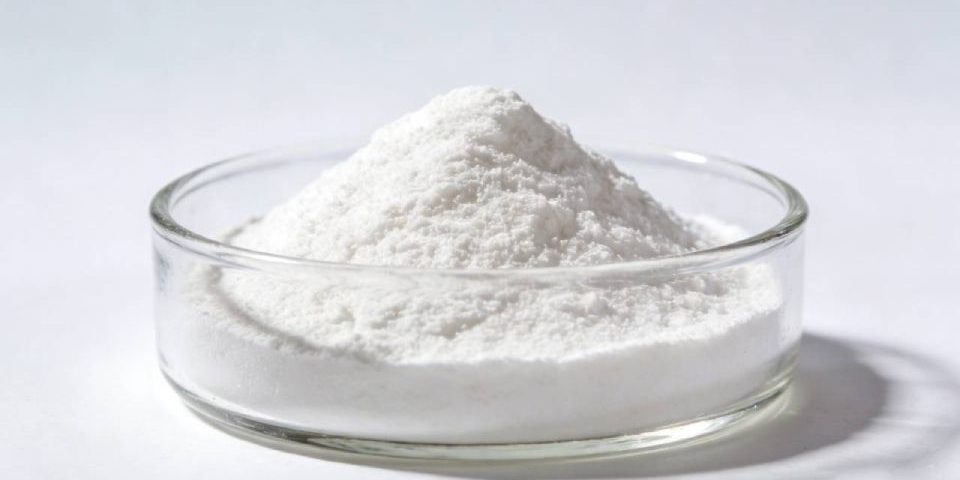
As a reliable supplier of pharmaceutical-grade sodium butyrate, we have always adhered to data-driven principles and core craftsmanship to provide global customers with high-quality products complying with USP/EP standards.
The Bulk Density (Loose) and Bulk Density (Tapped) of sodium butyrate microencapsulated granules, as key physical indicators, not only directly reflect the stability of our production processes but also deeply relate to your production efficiency, formulation molding, and end-product quality—our product’s precisely compliant data demonstrates impeccable professional strength and reliable quality.
I. Core Indicators: More Than Numbers, But Deep Empowerment for Production & Application
1. Bulk Density (Loose): 610mg/ml (Specification: 600-620mg/ml)
Definition: The mass per unit volume of sodium butyrate microencapsulated granules in a naturally accumulated state (filled freely by gravity without external compaction), a core parameter measuring the powder’s "natural bulkiness."
Core Customer Value: Directly determines the efficiency and formulation consistency of your production processes—
Excessively high density can cause powder caking and poor fluidity, increasing the time cost of mixing with excipients and even leading to uneven local composition;
Excessively low density may result in dust emission, excessive packaging space occupation, and elevated risks of weighing errors, affecting the concentration stability of products across batches.
Our product’s test result of 610mg/ml falls exactly at the golden midpoint of the specification range, achieving a perfect balance between fluidity and bulkiness: it disperses quickly and uniformly with excipients such as fillers and binders during mixing, significantly reducing stirring energy consumption; whether using volume-based weighing or mass-based feeding, it ensures precise dosage control and consistent concentrations of active sodium butyrate in every batch, eliminating production risks at the source.
2. Bulk Density (Tapped): 630mg/ml (Specification: 630-640mg/ml)
Definition: The mass per unit volume after compaction by external forces such as vibration or tapping (to eliminate interparticle voids), a key indicator reflecting the powder’s "compressibility and dense packing capacity."
Core Customer Value: Directly impacts your storage & transportation safety and formulation molding effect—
Excessively low density can cause stratification and volume expansion during transportation vibration, leading to packaging damage and product loss;
Excessively high density may result in over-compaction during tableting, granulation, and other processing steps, hindering dissolution and drug release and affecting the efficacy of end formulations.
Our product’s test result of 630mg/ml precisely meets the specification requirements and lies in the optimal practical range: it ensures moderate compressibility to meet the molding needs of pharmaceutical formulations such as rectal compound dosage forms (e.g., stable molding of suppositories and granules, which are not prone to loosening or deformation during storage) while avoiding the impact of over-compaction on dissolution rate; meanwhile, the mere 20mg/ml difference from the loose bulk density indicates highly stable interparticle porosity, preventing significant volume shrinkage or stratification due to environmental changes during transportation and storage, and significantly reducing logistics and warehousing risks.
II. Behind the Data: Craftsmanship and Quality Confidence
1. Stability Forged by Mature Processes
The precise compliance of loose and tapped bulk densities is no coincidence—it is backed by our industry-leading microencapsulation technology and strict full-cycle quality control system:
The uniformity of particle size and consistency of coating thickness meet high pharmaceutical-grade standards, with no fine powder adhesion or large particle agglomeration, ensuring stable stacking properties;
From raw material selection to finished product testing, every link adheres to USP/EP specifications and is verified through multiple tests, ensuring minimal batch-to-batch indicator fluctuations and making your production processes more controllable and efficient.
2. Precise Adaptation to High-End Formulation Needs
Mid-range loose bulk density → Ensures uniform mixing with excipients, avoiding local excessive or insufficient drug concentration, and guaranteeing uniform and safe efficacy of end formulations;
Compliant tapped bulk density → Supports moderate compaction molding in formulation processing, balancing dosage form stability and drug release rate, perfectly matching the rigorous requirements of pharmaceutical-grade formulations.
III. Choose Us: More Than a High-Quality Product, But a Reliable Partner
The two core density indicators of sodium butyrate microencapsulated granules, with their "golden balance" performance, confirm our professional strength:
Production Side: Cost reduction and efficiency improvement for you—enhanced mixing, feeding, and granulation efficiency, guaranteed dosage accuracy, and reduced production losses;
Storage & Transportation Side: Risk mitigation for you—controllable volume, resistance to caking and stratification, durable and safe packaging, and reduced logistics costs;
Application Side: Quality empowerment for you—fully adapting to pharmaceutical-grade formulation needs, with uniform efficacy, stable molding, and controllable dissolution, helping your products establish competitive advantages in the market.
Our products fully comply with USP/EP standards, and all test data are from ISO 17025 accredited laboratories, ensuring authenticity and traceability. Choosing our sodium butyrate microencapsulated granules means you get not only a high-quality product but also a customized solution based on professional technology and a worry-free cooperation experience—we speak with data, stand firm on quality, and become your trusted partner for pharmaceutical-grade sodium butyrate.