
High Oleic Sunflower Oil vs Camellia Oil: A Science-Backed Comparison
April 26, 2026
Sea Buckthorn Oil Comparison: Seed vs. Fruit vs. Whole Fruit Oil
May 2, 2026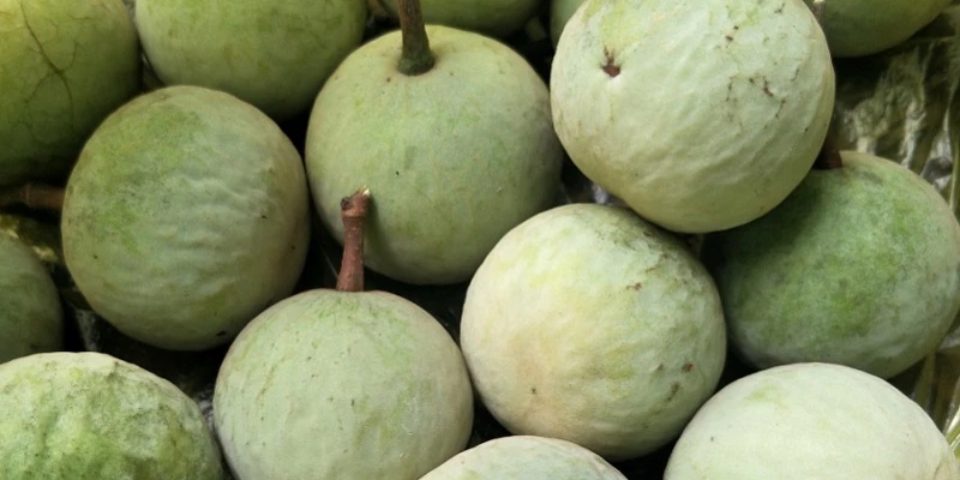
Nervonic acid at 44–51% of total fatty acids, a novel antitumor glycoprotein, endophytic fungi fermentation, macrolide synthesis, and karst ecosystem cultivation — Malania oleifera is a rare monotypic Chinese tree that has attracted fewer than 100 peer-reviewed studies, yet holds one of the richest bioactive profiles documented in any oil-bearing tree species.
(Li et al., 2020)
(Zhang et al., 2016)
(Xue & Shao, 2015)
(Yuan et al., 2014)
What Is Malania oleifera?
Malania oleifera Chun et S. Lee — known in Chinese as Suantouguo (蒜头果), garlic-fruit, or monkey-fruit — is a monotypic species in the family Olacaceae (iron-green tree family). It is an evergreen tree unique to China, officially listed as a Grade-II nationally protected endangered plant and included in the China Plant Red Data Book.
Its natural range is restricted to a narrow corridor spanning southeastern Yunnan (Wenshan, Guangnan, Funing counties) and western Guangxi (Longzhou, Jingxi, Debao, Daxin). The tree produces round fruits with a fleshy mesocarp; once the hard endocarp is removed, the cream-white kernel resembles a garlic clove — the origin of its common name.
Despite ecological and economic value, fewer than 100 published papers cover the species — the authors attribute this to extreme resource scarcity, a long fruiting cycle of 5–8 years, and limited public awareness. This scarcity makes every peer-reviewed study a strategic asset for responsible commercial development.
1. Medicinal & Pharmacological Value
Research into the bioactivity of Malania oleifera has uncovered a remarkable range of pharmacological effects across oil, protein, and polysaccharide fractions:
GP-1 and GP-2 isolated from seed residue polysaccharides showed significant inhibition of nasopharyngeal carcinoma (CNE-1) and lung cancer (H460) cells in vitro, with no damage to normal human liver cells (HL-7702) (Tang, 2013).
Water-soluble protein fractions demonstrated scavenging activity against superoxide anion (O₂⁻), DPPH, and hydroxyl radicals (·OH) to varying degrees (Yuan et al., 2014).
Malanin (the seed glycoprotein) significantly inhibited in-vitro proliferation of human leukemia K562 cells in a time- and dose-dependent manner; IC₅₀ = 1.58×10⁻⁸ mol/L. Synergistic inhibition was observed when combined with cisplatin (Yuan et al., 2014).
Kernel oil exhibited measurable DPPH radical-scavenging capacity. GC-MS analysis attributed this activity primarily to linoleic acid and palmitic acid (Shi et al., 2016).
2. Chemical Composition & Applications
2a. Fatty Acid Profile
Multiple GC-MS analyses across independent research teams have consistently confirmed a nervonic acid-dominant fatty acid profile with exceptionally high unsaturation. Key findings are summarised below:
| Fatty Acid | Content (%) | Note | Source |
|---|---|---|---|
| Nervonic Acid (C24:1Δ15) | 44.21 – 50.71 | Highest known plant source; rare in oil crops | Xue 2015; Zhang 2016 |
| Oleic Acid (C18:1) | ~20–36% | Combined with α-linolenic in some studies | Zhang 2016 |
| Erucic Acid (C22:1) | Present | One of 8 fatty acids identified by Xue et al. | Xue 2015 |
| Linoleic Acid (C18:2) ω-6 | Present | Essential fatty acid; antioxidant contribution | Xue 2015 |
| α-Linolenic Acid (C18:3) ω-3 | Present | Essential fatty acid | Xue 2015 |
| Palmitic Acid (C16:0) | Present | Antioxidant contribution identified | Shi 2016 |
| Total Unsaturated Fatty Acids | 94.77% | Extremely rare for a tree nut oil | Xue & Shao, 2015 |
2b. Nervonic Acid Extraction & Quantification
Optimised supercritical CO₂ extraction (SC-CO₂) was identified as the preferred industrial method. Key process conditions reported by Luo et al. (2015):
8 mesh
35 MPa
45 °C
2 hours
32.3%
5.4%
For analytical quantification, a GC method using a ZB-Wax capillary column was validated with nervonic acid showing a good linear range of 0.304–6.090 mg/mL, average recovery of 101.5%, and RSD of 2.12% (Luo et al., 2014).
2c. Endophytic Fungi as a Biotechnology Route to Nervonic Acid
Wang (2019) isolated 58 endophytic fungi from the pulp, kernel, endocarp, leaves, and branches of Malania oleifera. Among them, 19 strains showed high lipid productivity; secondary screening identified 2 strains capable of producing nervonic acid–containing oils:
- Penicillium olsonii: oil yield 23.97%, nervonic acid content 26.67%
- Aspergillus flavus: oil yield 44.85%, nervonic acid content 20.34%
This opens a sustainable fermentation pathway for nervonic acid production independent of tree cultivation.
2d. Industrial Applications of Malania Fatty Acids
The unique C24:1 (nervonic acid) and long-chain fatty acid content of Malania oil makes it a versatile feedstock for specialty chemistry beyond the nutraceutical sector:
C24:1 is the key precursor for synthesising cyclopentadecanolide (a key component of natural musk), used in perfumery, cosmetics, food, and pharmaceuticals. Solid-acid catalysis under optimised saponification (NaOH 25%, 90 °C, 4 h) maximised yield to 20.2% with repeated catalyst reuse (Lai et al.; Shen 2011).
Long-chain unsaturated fatty acids in Malania oil underwent ozonolysis and catalytic ring-closure to produce a series of macrolides: cycloundecanolide (1.0%), cyclotridecalide (22.4%), and cyclopentadecanolide (36.9%) (Huang et al., 2011). Chain length positively correlates with macrolide yield.
GXU08 lipase demonstrated excellent specificity toward methyl 15-hydroxypentadecanoate, enabling enzymatic synthesis of cyclopentadecanolide under mild conditions — avoiding harsh chemicals required in classical synthesis routes (Shen, 2011).
2e. Malanin: Structural Biology of a Novel Seed Glycoprotein
The toxic seed protein Malanin — confirmed as a glycoprotein by periodic acid-Schiff staining — has been characterised in detail over a series of studies:
| Property | Value / Finding | Reference |
|---|---|---|
| Molecular weight | 61,875 Da (BCA); ~65,940 Da (SDS-PAGE) | Yuan et al. 2009, 2015 |
| Isoelectric point | pI = 5.5 | Yuan et al. 2009 |
| Chain structure | A + B chains linked via disulfide bonds (–S–S–) | Yuan et al. 2009 |
| Neutral sugar content | 3.75% (phenol-sulfuric acid method) | Yuan et al. 2009 |
| Tryptophan content | 5.12 mg/g (~4 Trp residues/molecule) | Yuan et al. 2014 |
| Secondary structure | α + β mixed protein; stable in cis configuration | Yuan et al. 2016 |
| HepG-2 hepatoma activity | Apoptosis induction via mitochondrial membrane depolarisation | Zhang Wei, 2015 |
| Metal ion interaction | Cu²⁺ causes static fluorescence quenching; Ca²⁺ stabilises native conformation | Yuan et al. 2014 |
2f. Other Phytochemicals: Lignin, Lignan & Genetic Markers
3. Cultivation Technology & Ecological Adaptability
Given the species’ restricted natural range and protected status, cultivation research is critical both for conservation and commercial scale-up:
Seedling trials in Anhui showed phosphorus fertilisation significantly promoted growth, and seedlings demonstrated a preference for calcium. Optimal basal fertiliser composition identified for practical nursery production (Yu, 2013).
A rapid clonal propagation system via bud-scion grafting achieved 90.2% success rate, enabling production of superior genotype clones within 1–2 growing seasons rather than the 5–8 years required for seed-grown trees to fruit (Mao et al., 2016).
Wild Malania roots support dual colonisation by arbuscular mycorrhizal fungi (AMF, avg. 52.69%) and dark septate endophytes (DSE, avg. 46.96%), forming beneficial symbioses that likely enhance nutrient uptake in rocky, nutrient-poor karst soils (Mao et al., 2016).
Malania adapts well to shrub and open-canopy forest in southwestern Guangxi karst terrain. Under shrub/grass protection, seed germination rates are high and seedlings grow quickly, making direct seeding viable for karst revegetation (Lu et al., 2016).
Population life-table analysis across three distribution sites (Yunnan Guangnan, Guangxi Yazhang, Guangxi Longhushanshan) identified two mortality peaks at age class III and VI, with maximum mortality at age class VI. The survival curve approximates a Deevey Type II, indicating relatively even age-specific mortality — but population viability remains precarious given habitat fragmentation (Xie et al., 2009). Recommended interventions: selective thinning, artificial re-planting, and full enclosure protection.
Frequently Asked Questions
What Sets Malania Oil Apart?
References
| # | Citation | Journal / Source |
|---|---|---|
| 1 | Li Hong-chao et al. (2020). Research progress of Malania oleifera Chun et S. Lee. | J. Anhui Agricultural Sciences, 48(17): 8–10, 14 |
| 2 | Xue Bing & Shao Zhi-ling (2015). Characteristic indices and fatty acid composition of Yunnan Malania oil. | Grain Storage, 44(1): 44–45 |
| 3 | Yuan Yan et al. (2009). Purification, characterization and cytotoxicity of malanin, a novel plant toxin from seeds of Malania oleifera. | Toxicon, 54(2): 121–127 |
| 4 | Zhang Qian et al. (2016). GC-MS determination of fatty acid content in Malania oleifera oil. | J. Anhui Agricultural Sciences, 44(5): 15–17 |
| 5 | Wang Yi-fan (2019). Study on nervonic acid–containing oil produced by endophytic fungi from Malania oleifera. | Guangxi University (Dissertation) |
| 6 | Mao Ji-hua et al. (2016). Grafting propagation of the rare Chinese endemic plant Malania oleifera. | Forestry Science & Technology Newsletter, (2): 35–37 |
| 7 | Huang Lin-hua et al. (2011). Selective synthesis of macrolides from long-chain fatty acids of Malania oil. | Applied Chemistry, 40(1): 58–61 |
| 8 | Wei Jie-bing (2014). Cloning of Malania oleifera MEX gene and plant transformation. | Hunan Agricultural University (Dissertation) |
Ready to Source Malania oleifera Oil?
Competitive pricing on bulk nervonic acid–rich oil with full analytical documentation. Request samples, COA, or technical datasheet today.
