
Sea Buckthorn Oil Fatty Acid Profile: Palmitoleic Acid (ω-7) & ALA Content Guide
May 5, 2026
Goji Seed Oil & Flaxseed Oil Boost Immune Function: Peer-Reviewed Evidence
May 9, 2026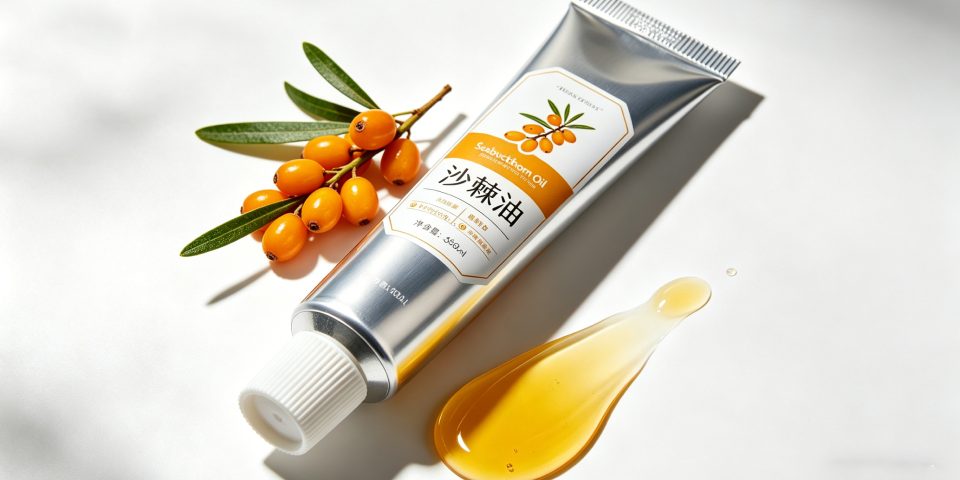
Sea buckthorn oil is emerging as a scientifically validated functional ingredient in oral care formulations. A clinically tested formula containing just 0.5% sea buckthorn oil has demonstrated remarkable efficacy in reducing gum inflammation by 61%, accelerating bleeding control by 35%, and promoting faster tissue repair — all within a standard toothpaste delivery system.
Why Oral Care Brands Are Turning to Sea Buckthorn Oil
When most consumers think of sea buckthorn (Hippophae rhamnoides), they picture bright orange berries or skin-care serums. However, the oil extracted from sea buckthorn seeds has quietly been building a strong evidence base in functional oral-care formulation.
Classified as both a food and a medicinal plant by China’s National Health Commission since 1977, sea buckthorn oil contains vitamin E, carotenoids, phytosterols, unsaturated fatty acids, and trace elements. Moreover, these bioactive compounds work together to nourish tissue, calm inflammation, and speed up wound healing — and these properties translate directly into practical oral-health benefits when the oil is added to toothpaste at the right level.
A peer-reviewed study by Li Lifen et al. (2018), published in Technique Express, provided the first systematic evaluation of a sea-buckthorn-oil toothpaste across three validated experimental models. This article breaks down what the data shows — and what it means for ingredient sourcing teams and product developers.
Key insight: At just 0.5% (w/w) inclusion, sea buckthorn oil delivered anti-inflammatory performance statistically equivalent to a commercially available anti-inflammatory toothpaste — while simultaneously improving hemostasis and tissue regeneration. In other words, no other single ingredient in that formulation accounted for these effects; the controlled study design confirms this.
Bioactive Profile: What Makes Sea Buckthorn Oil Work?
Sea buckthorn oil’s oral-health benefits come from a powerful mix of nutrients that rarely appear together in a single plant source. Here is a breakdown of the key active compounds — and how each one contributes to the overall effect.
Antioxidants: Vitamin E and Carotenoids
Vitamin E (in its tocopherol form) acts as a shield against free radicals in inflamed gum tissue. Meanwhile, β-carotene — the pigment that gives sea buckthorn its bright orange colour — works as a building block for vitamin A. Vitamin A is essential for keeping the gum lining healthy and for supporting the growth of fibroblasts, the cells that rebuild tissue after injury.
Phytosterols: Nature’s Anti-Inflammatory Compound
Phytosterols are plant fats that work in a similar way to cholesterol in the body. At the cell membrane level, they compete with inflammatory messengers and help reduce swelling. This mechanism is one of the main reasons sea buckthorn oil performs so well in the anti-inflammatory tests described below.
Unsaturated Fatty Acids: Omega-3, Omega-6, and Omega-7
Sea buckthorn oil is unusually rich in three types of beneficial fatty acids. Linoleic acid (omega-6) and α-linolenic acid (omega-3) are both converted by the body into anti-inflammatory signaling molecules. Palmitoleic acid (omega-7), which is less common in plant oils, has been linked in multiple studies to faster mucosal healing — making it especially relevant for oral tissue repair.
Trace Minerals: Iron, Copper, Manganese, and Zinc
These four minerals act as helpers for collagen production and for enzymes that resolve inflammation. Without adequate levels of these nutrients, the body’s natural healing cycle slows down. Sea buckthorn oil supplies them in amounts that meaningfully support these processes.
Together, these active compounds work on multiple pathways at once — calming inflammation, protecting cells, and rebuilding tissue. This multi-target action is what makes sea buckthorn oil stand out compared to single-ingredient alternatives.
Three Experiments, Three Confirmed Benefits
Anti-Inflammatory Activity
Mouse ear-swelling model (xylene-induced). Sea buckthorn oil toothpaste matched pharmaceutical-grade anti-inflammatory controls with a 61.35% inhibition rate.
Hemostatic Effect
Rabbit liver-bleeding model. Bleeding time reduced from 4.42 min (blank) to 2.87 min — a statistically significant improvement (P < 0.05).
Tissue Repair Promotion
HGF-1 human gingival fibroblast scratch assay. 48-hour cell migration was visibly enhanced, comparable to the serum-rich positive control, indicating faster wound closure.
1. Anti-Inflammatory: 61% Swelling Inhibition
The study used a classic xylene-induced ear-swelling model in KM mice — the same method recommended in Chinese Pharmacopoeia guidelines for anti-inflammatory testing. Four groups were tested side by side: a negative control (xylene only), a plain toothpaste with no sea buckthorn oil, the sea buckthorn oil toothpaste (0.5% w/w), and a commercial anti-inflammatory toothpaste as the positive control.
| Group | Swelling Value (mg) | Inhibition Rate (%) | vs. Positive Control |
|---|---|---|---|
| Negative control | 24.53 ± 5.69 | — | — |
| Plain toothpaste (no SBO) | 17.78 ± 3.63 | 27.52 | Not significant |
| Positive control toothpaste | 9.60 ± 3.83 | 60.86 | Reference |
| Sea buckthorn oil toothpaste | 9.48 ± 3.33 | 61.35 P < 0.05 | No significant difference |
Here is the key finding: adding just 0.5% sea buckthorn oil transformed an ordinary toothpaste from modest (27.5% inhibition) to clinically meaningful (61.4% inhibition) anti-inflammatory performance. As a result, the sea buckthorn oil formulation was statistically equivalent to the commercial anti-inflammatory product (P > 0.05) — meaning the two performed almost identically in the test.
2. Hemostasis: Meaningful Reduction in Bleeding Time
Next, the researchers tested how quickly each formulation could stop bleeding. They used a rabbit liver-wound model — a well-established method for hemostatic screening — because it produces a reproducible cut with a steady blood-flow rate, making results easy to compare.
| Group | Mean Hemostasis Time (min) | Significance |
|---|---|---|
| Blank control | 4.42 ± 0.57 | Reference |
| Plain toothpaste (no SBO) | 4.09 ± 0.42 | Not significant |
| Positive control (commercial hemostatic toothpaste) | 3.86 ± 0.61 | — |
| Sea buckthorn oil toothpaste | 2.87 ± 0.33 | P < 0.05 |
The sea buckthorn oil toothpaste achieved the shortest bleeding time of all groups — notably outperforming even the commercial hemostatic benchmark. This suggests that the combination of phytosterols, vitamin K, and fatty acids in sea buckthorn oil activates clotting and tissue sealing more efficiently than the hemostatic blend in the reference product.
3. Tissue Repair: Fibroblast Migration Confirmed In Vitro
Of the three experiments, the HGF-1 cell scratch test is arguably the most relevant to real-world oral health. Human gingival fibroblasts are the cells responsible for healing gum tissue after injury. In this test, researchers grew these cells to form a complete layer, then made a small scratch to simulate a wound. Next, they added diluted toothpaste slurry (sea buckthorn oil concentration: just 0.5 µg/mL) and monitored how far the cells migrated to close the gap over 48 hours.
The microscope images taken at 0 hours and 48 hours revealed the following:
- Model control group: Minimal cell migration; cells lost their characteristic spindle morphology and became rounded — a sign of poor viability or stress response.
- Plain toothpaste group: Similar poor migration and morphological changes to the model control — confirming that the detergent and abrasive base alone do not drive repair.
- Sea buckthorn oil toothpaste group: Robust cell migration into the scratch area; cells maintained healthy fibroblast morphology (elongated, spindle-shaped). Migration rate was comparable to the serum-rich positive control group.
This result positions sea buckthorn oil as a genuine tissue-regenerative ingredient, not just a swelling reducer — and that distinction matters for how the product is positioned in the premium oral-care market.
Formulation Stability: A Practical Win for Manufacturers
One common concern when adding plant oils to toothpaste is oxidative instability — in other words, the oil going rancid, changing colour, or losing potency over the shelf life of the product. The study addressed this concern directly with a 3-month stability test run at both 45 °C (accelerated ageing) and room temperature.
All parameters tested — appearance, fragrance, pH (7.50–7.98 throughout the study), physical stability, consistency, and sea buckthorn oil content (0.47–0.50% w/w) — remained well within the limits set by Chinese national standard GB 8372. Additionally, fatty-acid GC analysis confirmed that the oil’s active compounds did not break down during the 3-month period.
For formulation teams: The 0.5% w/w level appears to be the sweet spot — it is active, stable, and affordable enough to support a premium but realistic retail price. Supercritical CO₂-extracted sea buckthorn oil (the grade used in this study) also resists oxidation better than cold-pressed versions, making it the preferred choice for oral-care formulations.
What to Look for When Sourcing Sea Buckthorn Oil for Oral Care
Not all sea buckthorn oil is equal. For oral-care applications, the following five criteria matter most — and missing even one of them can result in an ingredient that looks good on paper but underperforms in the tube.
1. Extraction Method
Supercritical CO₂ (SC-CO₂) extraction is the gold standard for oral-care use. This method keeps heat-sensitive active compounds intact, produces a neutral scent that does not clash with toothpaste flavours, and leaves zero solvent residues — which is especially important for products that are partially swallowed.
2. Fatty Acid Profile (GC-Verified)
Ask your supplier for gas chromatography (GC) test results confirming the presence of omega-7 (palmitoleic acid), omega-6 (linoleic acid), and omega-3 (α-linolenic acid). These three are the main markers of biological activity. Request certificates of analysis (CoAs) for every lot — do not rely on a single specification sheet.
3. Carotenoid Content
The bright orange colour of sea buckthorn oil comes from carotenoids such as β-carotene and lycopene. Low carotenoid readings on the CoA are a red flag for oil that has been diluted, stored at high temperature, or produced from low-quality starting material. A reputable supplier will be happy to share this data upfront.
4. Freshness Indicators: Peroxide Value and Acid Value
Two numbers to check every time: peroxide value (PV) should be below 5 meq/kg, and acid value (AV) should be below 2 mg KOH/g. High readings mean the oil has started to oxidise, which will reduce its potency in the finished product and can cause off-notes over shelf life.
5. Geographic Origin
Sea buckthorn grown at high altitude — such as on the Qinghai-Tibet Plateau or China’s Loess Plateau — develops higher bioactive density as a natural stress response. This translates into stronger colour, richer fatty acid content, and better overall performance. Always ask for origin documentation, not just a supplier name.
Frequently Asked Questions
What concentration of sea buckthorn oil is effective in toothpaste?
The research used 0.5% w/w and demonstrated statistically significant anti-inflammatory and hemostatic effects. This low inclusion rate is commercially attractive — it keeps formulation costs manageable while delivering functional benefits comparable to dedicated therapeutic toothpastes.
Can sea buckthorn oil toothpaste help with bleeding gums?
Yes. The rabbit liver bleeding model showed a mean hemostasis time of 2.87 minutes for the sea buckthorn oil formulation, compared to 4.42 minutes for the blank control — a 35% improvement that was statistically significant (P < 0.05). While animal models do not directly translate to clinical outcomes, the mechanism (platelet aggregation support, fibrin activation by phytosterols) is biologically plausible in human gingival tissue.
Is sea buckthorn oil safe for use in toothpaste?
Sea buckthorn has GRAS (Generally Recognised As Safe) status in food applications in many jurisdictions, and the study confirmed the finished toothpaste meets all requirements of GB 8372 (Chinese national toothpaste standard), including pH, stability, and safety parameters. For cosmetic regulatory compliance, SC-CO₂-extracted sea buckthorn oil is listed in the INCI directory as Hippophae Rhamnoides Seed Oil.
How does sea buckthorn oil compare to other natural anti-inflammatory toothpaste ingredients?
In this study, the sea buckthorn oil formulation achieved a 61.35% swelling inhibition rate — matching the commercial anti-inflammatory positive control. This places it in the same efficacy tier as tea tree oil and centella asiatica extracts commonly used in natural oral care, but with the added advantage of simultaneous hemostatic and tissue-repair activity that those ingredients do not provide.
Does sea buckthorn oil affect toothpaste stability or colour?
The 3-month stability study showed no significant changes in appearance, pH, fragrance, or active content at both 45 °C and room temperature. The orange pigment of sea buckthorn oil is diluted at 0.5% inclusion and does not visibly discolour white or striped toothpaste formulations, though formulators should confirm this in bench trials with their specific base.
Where can I source pharmaceutical-grade sea buckthorn oil for toothpaste formulation?
TongyuBio supplies SC-CO₂-extracted sea buckthorn seed oil verified for fatty acid profile, carotenoid content, peroxide value, and acid value. Our specifications are designed for functional oral-care, nutraceutical, and cosmeceutical applications. Contact our team for technical data sheets and samples.
Conclusion: Sea Buckthorn Oil Is an Oral-Care Ingredient Worth Serious Attention
The Li et al. (2018) study offers solid, multi-model evidence that sea buckthorn oil at 0.5% w/w delivers three real benefits in toothpaste: anti-inflammation, faster bleeding control, and tissue repair. All three effects were statistically verified, and the formulation passed full national-standard stability testing.
For brands building in the sensitive care, gum health, or natural functional toothpaste categories, sea buckthorn oil is a scientifically credible, stable, and story-friendly ingredient. In short, it can genuinely set a product apart on both performance claims and brand narrative.
As premium oral care keeps growing — driven by consumers who want proven natural ingredients, not just botanical marketing — sea buckthorn oil is well-positioned to become a go-to functional ingredient in the category.
Source Premium Sea Buckthorn Oil for Your Formulation
TongyuBio supplies SC-CO₂-extracted sea buckthorn oil with full laboratory testing, lot traceability, and formulation support. Serving oral care, nutraceutical, and cosmeceutical manufacturers worldwide.
Li Lifen, Chen Minshan, Wang Zhenshi, Zeng Xiaoyu. Anti-inflammatory, hemostasia and injury-repairing effects of toothpaste with sea buckthorn oil [J]. Technique Express, 2018, 41(1): 28–31. DOI: 10.13222/j.cnki.dc.2018.001.006
